
 English
  French
  Spanish
  Turkish
  Russian
 How to Choose a Reliable Filter Press Manufacturer?
Filter presses are a very common solid-liquid separation device in industries such as industrial wastewater treatment, chemical filtration, mine tailings treatment, pharmaceuticals, and metallurgy. For many buyers, choosing a suitable filter press is not just about comparing prices, but more importantly, choosing a reliable filter press manufacturer.
So, how can you choose a reliable filter press manufacturer? You can consider the following aspects before purchasing.
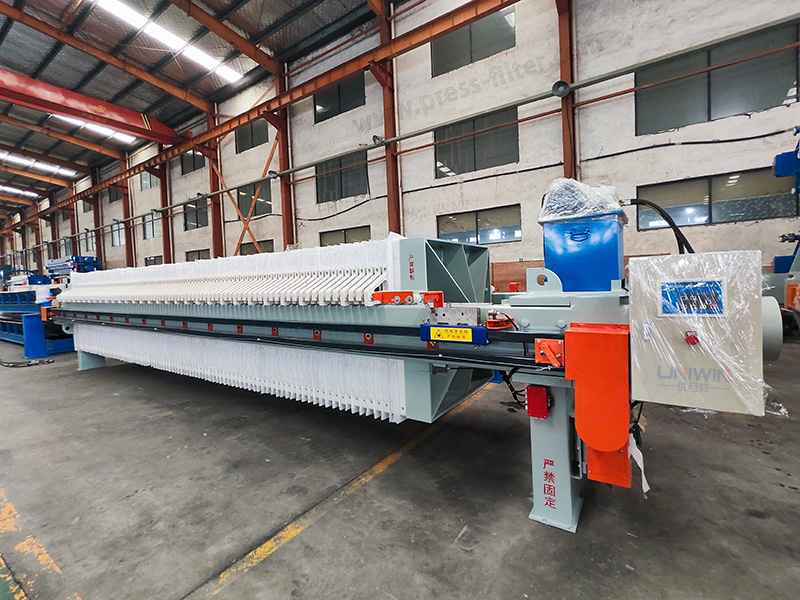
Does the Manufacturer Understand Your Material?
A professional filter press manufacturer will typically first confirm the following information:
- What material is being processed?
- What is the daily or hourly processing capacity?
- What is the approximate solids content of the feed?
- Is the material corrosive, sticky, or heat-sensitive?
- What is the required moisture content of the filtered cake?
- Does the filtrate need to be recovered?
- Is the site equipped with a plate shifter, a drip tray, a filtrate collection tank, a belt conveyor, a filter cloth washing system, etc.?
Reliable manufacturers should recommend equipment based on material characteristics, processing capacity, and site requirements, rather than simply applying standard models.
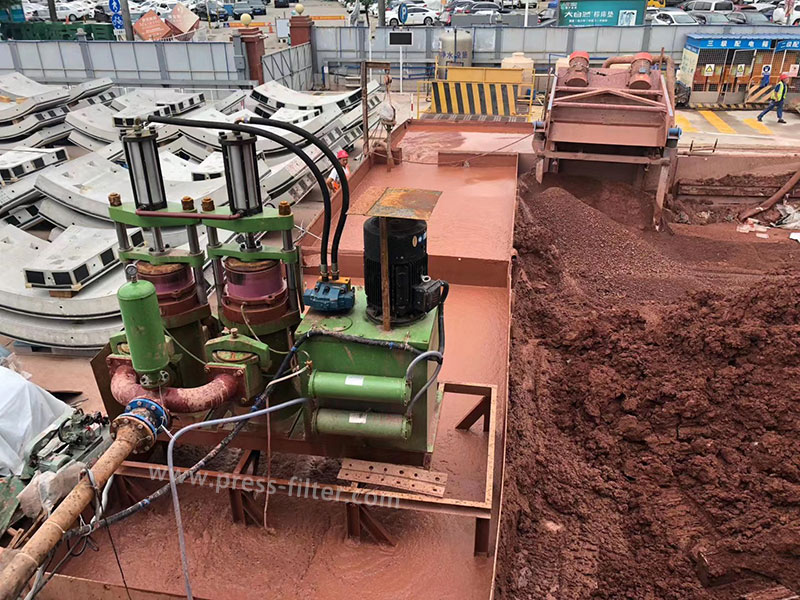
Does the Manufacturer Have A Wealth of Industry Case Studies?
Filter presses have a wide range of applications, and the operating conditions vary greatly across different industries.
Before purchasing, you can ask the manufacturer:
- Have they completed filtration projects for similar materials?
- Do they have actual operation videos?
- Do they have photos of customer sites?
- Do they have shipping case studies?
- Can they provide trial operation videos or filtration test results?
The more real-world case studies a manufacturer has, the richer their experience in actual projects. For non-standard materials, case experience is often more valuable than simple parameter tables.
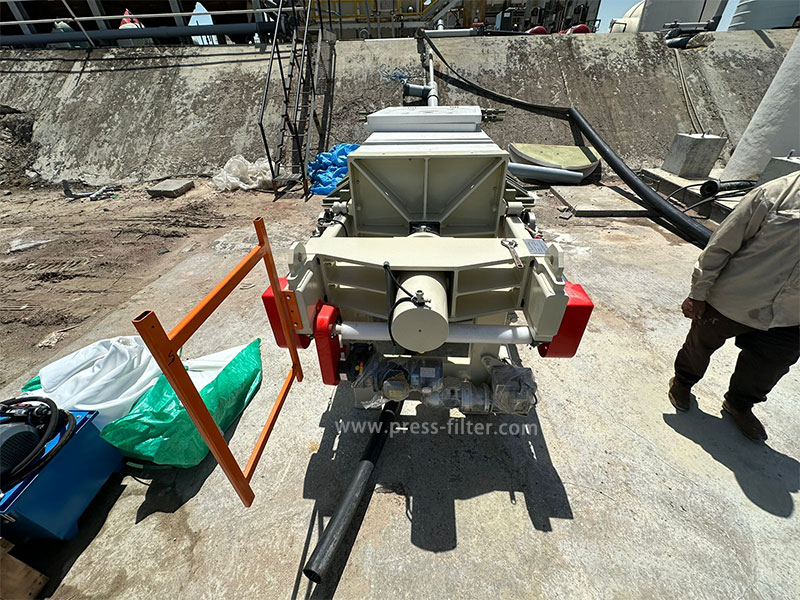
Does the Manufacturer Possess Reasonable Selection Capabilities?
Selecting a filter press isn’t just about the filtration area. Many buyers, when inquiring about prices, will say, “I need a filter press with a filtration area of X square meters,” but in reality, filtration area is only one parameter.
Reasonable selection also needs to consider:
- Filter chamber volume
- Number and size of filter plates
- Feed pressure
- Feed pump flow rate
- Pressing method
- Filter cloth material
- Level of automation
- Filtration discharge method (open flow/hidden flow)
- Single batch filtration time
- Daily work shifts
If the manufacturer can clearly explain their selection logic, it indicates that their technical capabilities and project experience are relatively more reliable.
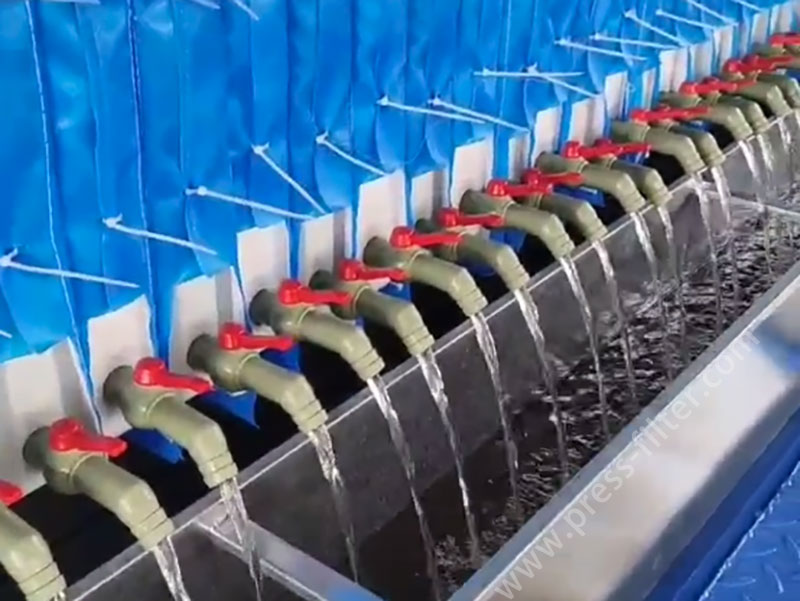
Can the Manufacturer Provide A Complete Solution?
Many projects require more than just a filter press; they also need a complete filtration system.
Common supporting equipment includes:
- Feed pump
- Hydraulic station
- Electrical control cabinet
- Filter cloth
- Filtrate collection tank
- Drip tray
- Filter cake belt conveyor
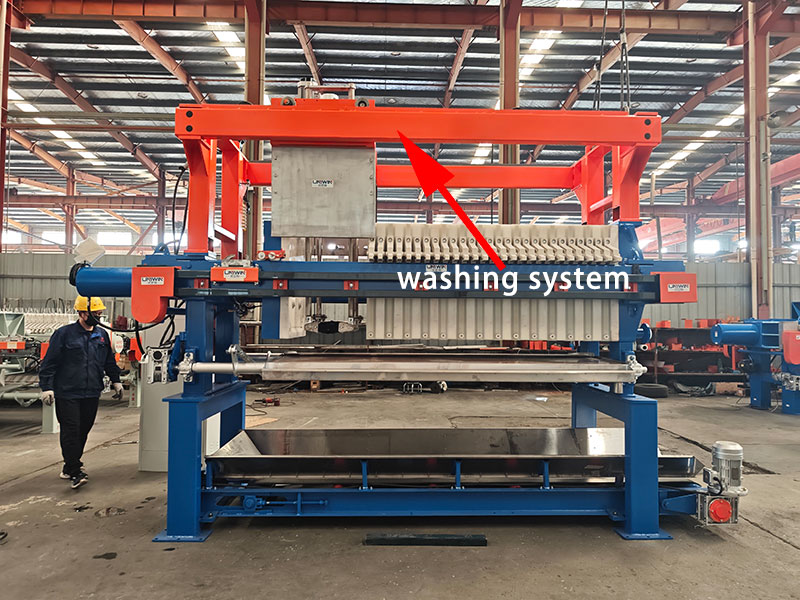
- Filter cloth washing system
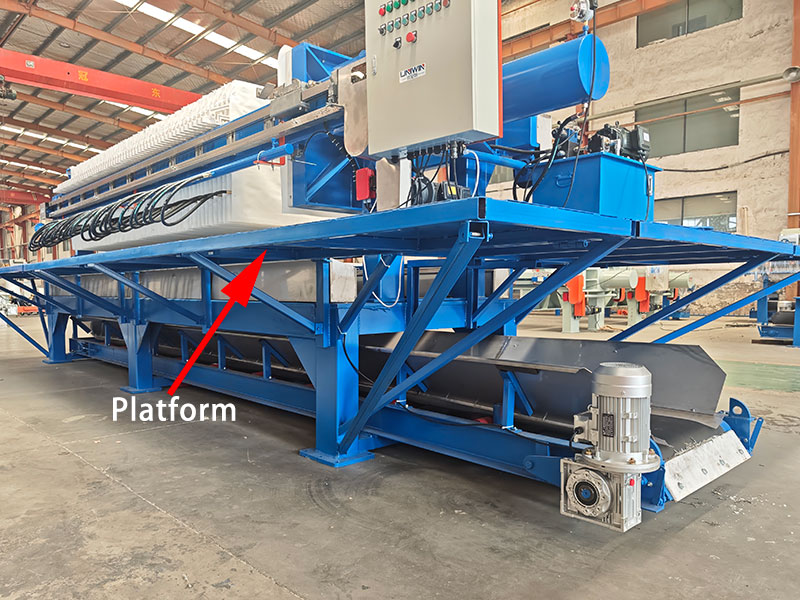
- Platform and guardrails
- Pipe interfaces
- Sludge storage tank or mixing tank
Reliable manufacturers can usually provide complete solid-liquid separation solutions based on the on-site process flow, thereby improving operational efficiency.
Don’t Just Look at the Lowest Price
Many buyers receive quotes from different manufacturers when choosing a filter press manufacturer. However, it’s crucial not to focus solely on the total price but to compare the configurations in detail.
Price differences in filter presses typically stem from the following factors:
- Filter plate material and weight
- Hydraulic system configuration
- Electrical component brands
- Level of automation
- Filter cloth quality
- Whether a feed pump is included
- Whether auxiliary equipment, such as a drip tray, filtrate collection tanks, and a belt conveyor, is included
Some low-priced equipment may have simplified filter plates, hydraulic systems, or electrical configurations. While the price may be low in the short term, problems such as equipment deformation, poor sealing, filter plate damage, automation malfunctions, and high maintenance costs may arise later.
Check If the Equipment Manufacturing and Factory Testing Are Up to Standard
Filter presses are industrial equipment, and the structural strength and factory testing are crucial.
Focus on the following:
- Is the frame welding secure?
- Are the filter plates installed neatly?
- Has the hydraulic system been tested?
- Does the automatic plate pulling function smoothly?
- Has the electrical control system been debugged?
- Has a no-load test been performed?
- Can a factory test video be provided?
Reliable manufacturers will generally inspect the equipment and conduct no-load tests before shipping to ensure easier installation and commissioning upon arrival at the site.
Consider After-Sales Service and Technical Support Capabilities
Filter presses can experience various problems during long-term operation. Therefore, after-sales service is a crucial factor when choosing a manufacturer.
- Before purchasing, it is recommended to confirm:
- Does the manufacturer provide installation guidance?
- Does the manufacturer provide an operation manual?
- Do they provide drawings?
- Is remote video guidance available?
For overseas projects, English documentation, video guidance, and remote technical support are extremely important.
Conclusion
When choosing a filter press manufacturer, one should not only focus on the lowest price, but also comprehensively consider the manufacturer’s selection capabilities, manufacturing capabilities, project experience, supporting capabilities, and after-sales service. A reliable filter press manufacturer should be able to provide complete filtration solutions according to customer requirements. You can choose Uniwin; we are a professional filter press manufacturer.