
 English
  French
  Spanish
  Turkish
  Russian
 Which Type of Filter Press is Suitable for High-Viscosity Materials?
High-viscosity slurries are commonly found in industries such as textile wastewater, chemical wastewater, food processing, starch production, and organic sludge.
Compared to ordinary low-viscosity slurries, these materials often exhibit poor flowability, slow filter cake formation, and long filtration cycles.
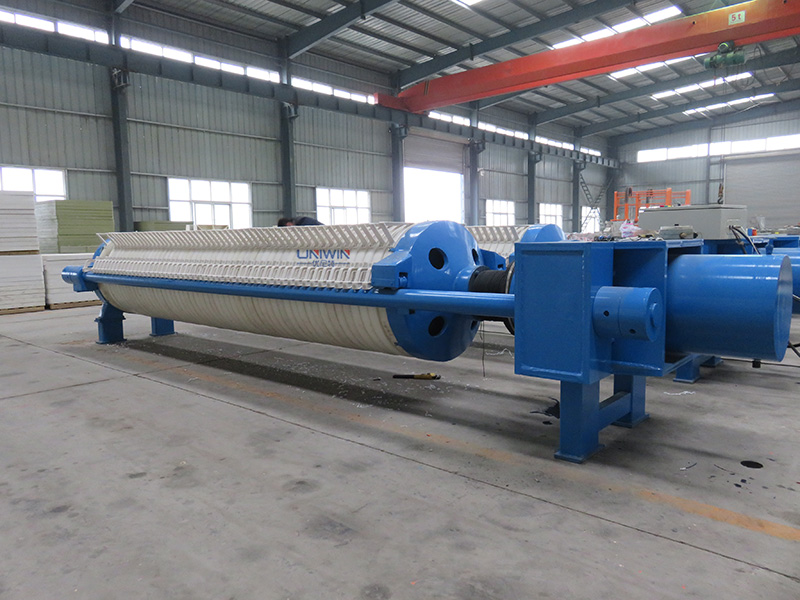
For wastewater with particularly high viscosity and high levels of starch or organic matter, high-pressure filter presses are more suitable. The following section will detail which filter presses are suitable for high-viscosity materials.
Why are High-Viscosity Materials Difficult to Filter?
High viscosity itself increases the flow resistance of the material in the pipeline and in the filter cake, but the actual filtration difficulty is also closely related to the material’s composition.
Take textile wastewater as an example. Some textile wastewater contains a large amount of starch, organic matter, slurry, and fine suspended particles. After storage or fermentation, the viscosity of the material will increase significantly.
When this type of slurry is directly fed into a filter press, the following may occur:
- The filtrate flows through very slowly
- The filter cake fails to form quickly enough
- The feed pressure increases but the filtration volume is very small
- A single filtration cycle is very long
- The filter cake has a high moisture content
Why is Pre-Conditioning Necessary for High-Viscosity Wastewater?
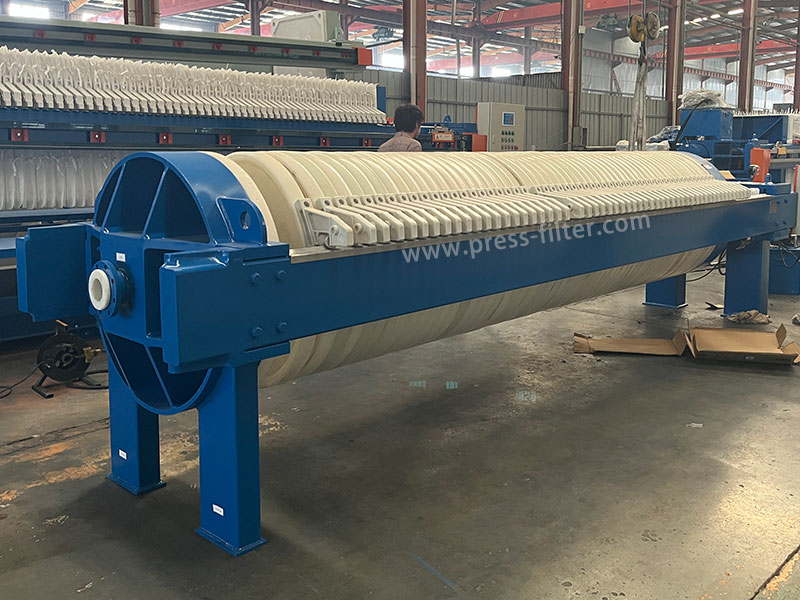
For high-viscosity wastewater, chemical pre-conditioning is generally recommended before it enters the filter press.
A common method is to add PAC (polyaluminum chloride) + PAM (polyacrylamide). Through coagulation and flocculation, the originally dispersed fine particles are transformed into larger flocs.
Therefore, for this type of high-viscosity wastewater, proper pre-conditioning is often more important than simply increasing the filter press area. Without proper pre-conditioning, even using a larger filter press may still result in excessively long filtration cycles.
Why Use a High-Pressure Filter Press?
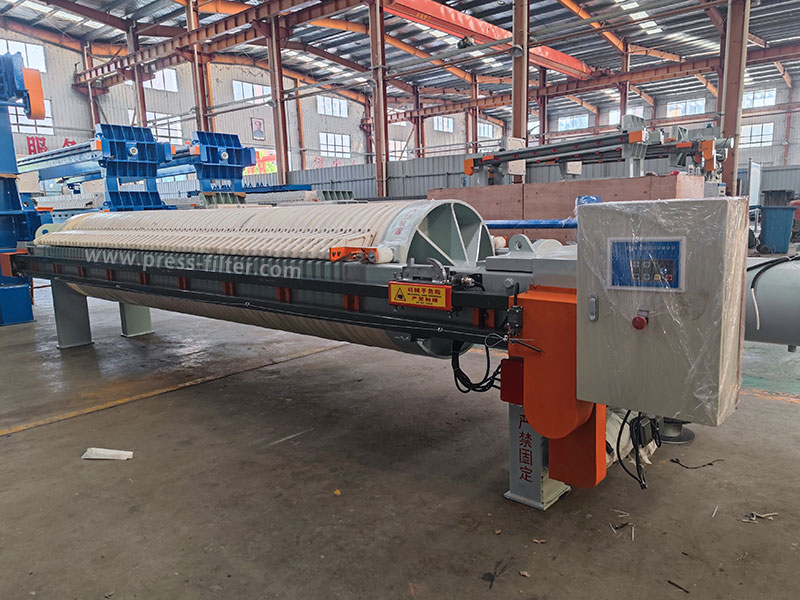
For materials with high viscosity and high filter cake resistance, if the feed pressure is too low, the slurry will have difficulty continuously passing through the filter cake to complete solid-liquid separation.
As filtration progresses, the filter cake becomes thicker, and the filtration resistance increases. Therefore, these materials typically require a higher feed pressure than easily filterable slurries.
However, it’s important to note that higher pressure is not always better. The filter press frame, filter plates, feed lines, and pumps all have rated operating pressures; the actual operating pressure must be controlled within the equipment’s allowable range.
What Feed Pump is Best for High-Viscosity Materials?
Plunger pump
Plunger pumps can provide high feed pressure, making them suitable for filter press systems requiring high-pressure filtration.
Suitable for:
- High filtration pressure requirements
- Materials with a certain viscosity
- Maintaining high feed pressure in the later stages
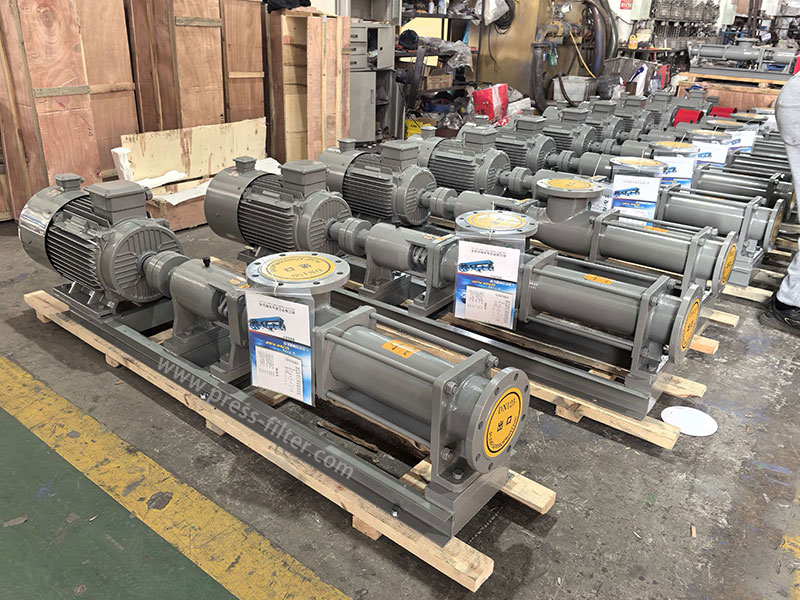
Screw pumps
Screw pumps offer good conveying capacity for high-viscosity slurries, with relatively stable flow rates.
Suitable for:
- High-viscosity slurries
- Organic sludge
- Textile slurries
- Materials with poor flowability
Therefore, both plunger pumps and screw pumps can be considered for high-viscosity textile wastewater; the specific choice depends on the required flow rate, pressure, and material condition.
For example, for a textile wastewater treatment plant with a daily processing capacity of 20 cubic meters and a solid content of 6%, if a 100 m² filter press is selected, a screw pump with a flow rate of 60 m³ and a feed rate of 12 kg should be chosen. If a 50 m² high-pressure filter press is selected, a screw pump with a capacity of approximately 12 m³/h can be selected based on the actual working conditions.
Conclusion
High-viscosity, difficult-to-filter materials require excellent pre-conditioning and sufficient feed pressure.
If the budget allows and a lower filter cake moisture content is desired, a diaphragm filter press is the preferred choice. If the customer has a limited budget, a high-pressure chamber filter press can also be used.