
 English
  French
  Spanish
  Turkish
  Russian
 4 Common Automation Functions of Filter Press
Compared to traditional manual operation, automated filter presses not only improve production efficiency but also reduce labor costs, improve the working environment, and ensure a more stable and reliable filtration process. In addition to basic functions such as automatic pressure holding and automatic pressing, they can be configured with automatic plate unloading, liquid collection devices, conveyor belt, and filter cloth automatic cleaning systems to achieve intelligent operation of the entire filtration process under different operating conditions.
This article will detail these four common automation functions and their advantages.
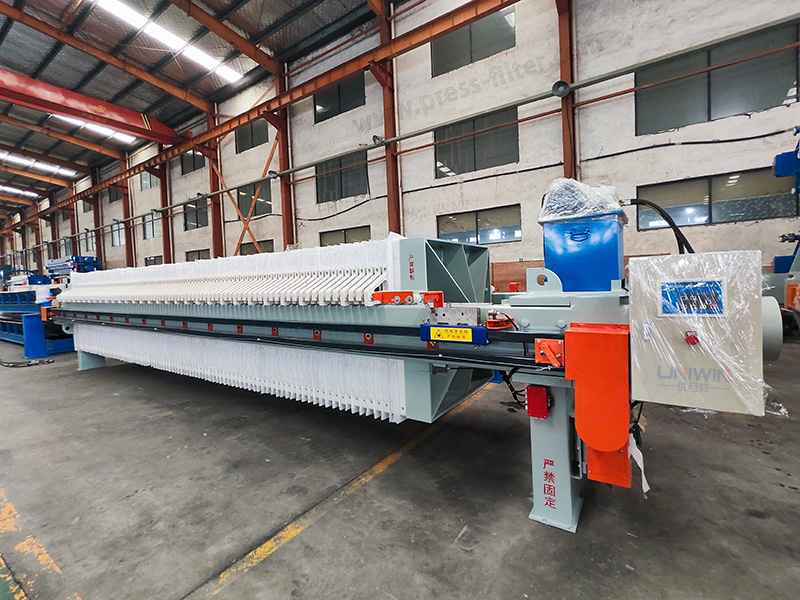
Automatic Plate Shifter
Automatic plate pulling and unloading is one of the most common and important automation functions of modern filter presses.
After filtration, the hydraulic system releases the filter plates, and the plate-pulling device pulls each plate sequentially according to a set program (multiple plates can also be pulled at once), allowing the filter cake to fall off automatically under its own weight, eliminating the need for manual plate pulling. An automatic vibrating device can also be added to assist unloading as needed, greatly improving unloading efficiency.
Advantages
- Improve unloading efficiency. The automatic plate pulling speed is fast, which can greatly shorten the unloading time and improve the equipment utilization rate.
- Reduce labor costs. The entire unloading process is completed automatically, reducing manual participation and labor intensity.
- Suitable for continuous production. It is especially suitable for large filter presses and continuous production conditions to achieve stable and efficient operation.
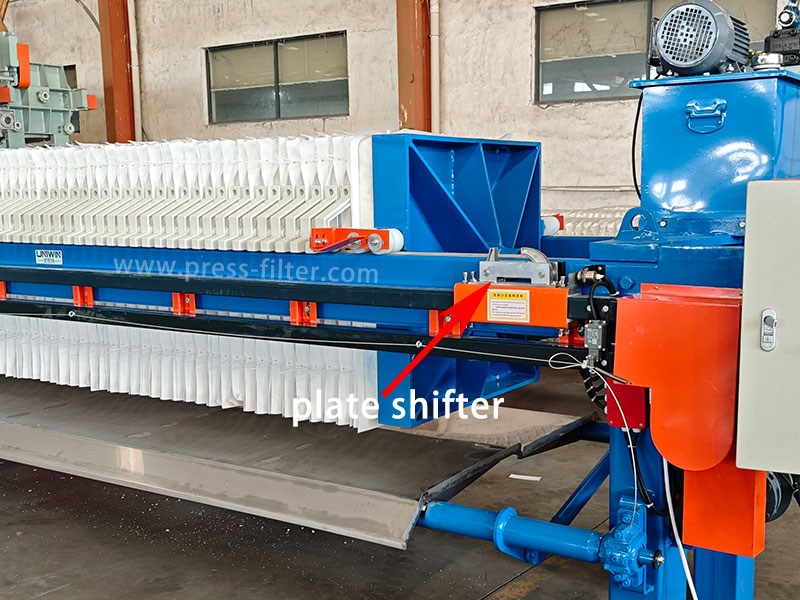
Drip Tray
During filtration in a filter press, a small amount of liquid leakage is common. Without a collection device, the filtrate will drip directly onto the ground, affecting the work environment, potentially contaminating the product, or increasing cleaning workload. A drip tray solves this problem.
Working principle
During filtration, the drip tray is closed, and the dripping filtrate flows along it into the collection tank.
When filtration is complete and unloading is ready, the drip tray automatically opens, positioned below the filter plates, and the filter cake falls onto the conveyor belt below.
After unloading, the drip tray closes again, initiating the next filtration cycle.
Advantages:
- Keeps the area around the equipment clean
- Prevents secondary contamination of the filter cake
- Reduces manual cleaning work
- Meets environmental protection production requirements
For industries such as food, pharmaceuticals, and fine chemicals, the flip plate is an essential component.
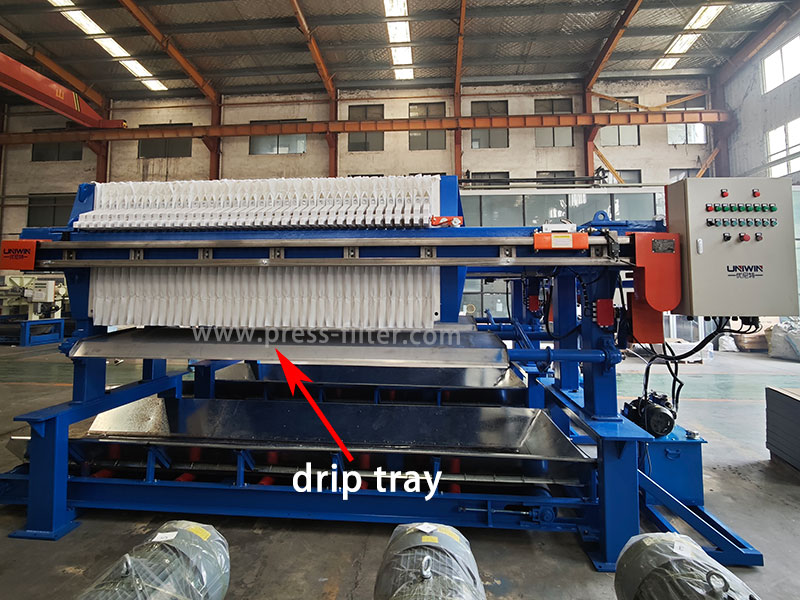
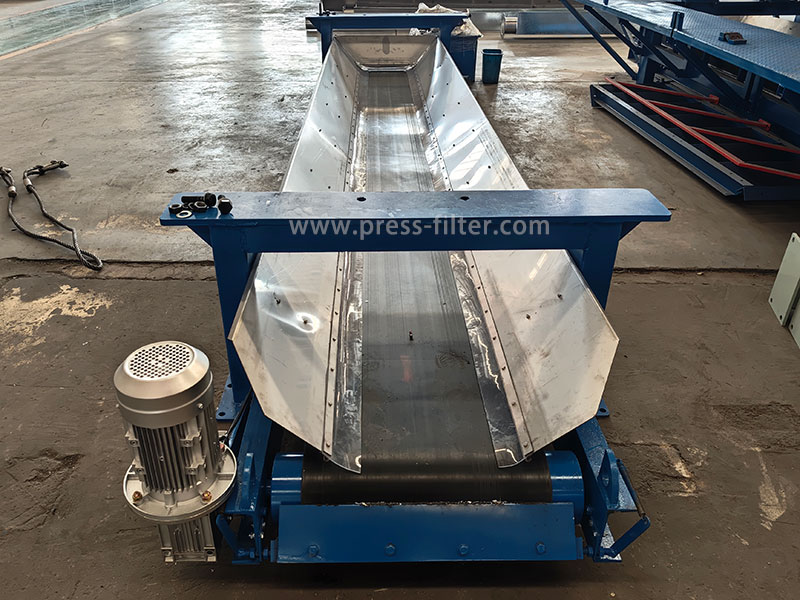
Belt Conveyor
Manual collection of filter cake after it falls off is not only inefficient but also affects the next filtration cycle.
Installing a belt conveyor under the filter press allows for automatic transport of the filter cake to a designated location, forming a continuous production line with subsequent equipment.
Advantages:
- Automatic filter cake collection
- Continuous transport to silos or transport vehicles
- Reduced manual handling; Increased production automation
- The belt conveyor length, width, angle, and operating speed can all be customized according to the site layout
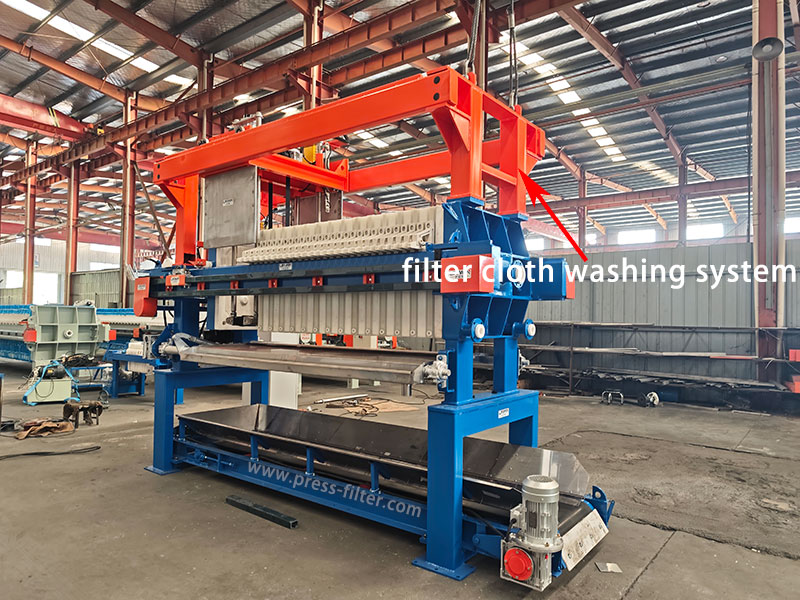
Automatic Filter Cloth Washing System
Filter cloth is a crucial filtration medium in filter presses. Over time, fine particles on the filter cloth surface gradually clog the filtration pores, leading to decreased filtration speed, increased filter cake moisture content, and even affecting filtration efficiency.
The automatic filter cloth washing device periodically uses high-pressure water to thoroughly clean the filter cloth, restoring its permeability.
Operating method
After the filter cake is unloaded, the high-pressure spray device automatically moves along the filter plate, with multiple nozzles applying high-pressure water to each filter cloth, removing fine particles adhering to its surface. The entire cleaning process is automated and requires no manual operation.
Advantages
- Restores filtration speed; Extends filter cloth lifespan
- Reduces filter cloth replacement costs; Maintains stable filtration performance
- Improves overall machine operating efficiency
- For processing high-viscosity, fine-particle materials, the automatic cleaning system can significantly improve equipment operating stability
Conclusion
Automatic plate shifter, drip tray, belt conveyor, and automatic filter cloth washing devices not only improve equipment operating efficiency but also reduce labor costs, improve the production environment, and achieve a safer and more stable filtration process.