
 English
  French
  Spanish
  Turkish
  Russian
 Chemical Industry Filter Press Selection Guide: Judging by Corrosivity, Temperature, and Solids Content
For chemical companies, selecting a suitable filter press hinges on three key factors: corrosivity, temperature, and solids content. These three parameters determine the filter press’s structural materials, filter plate type, filter cloth configuration, and feeding method.
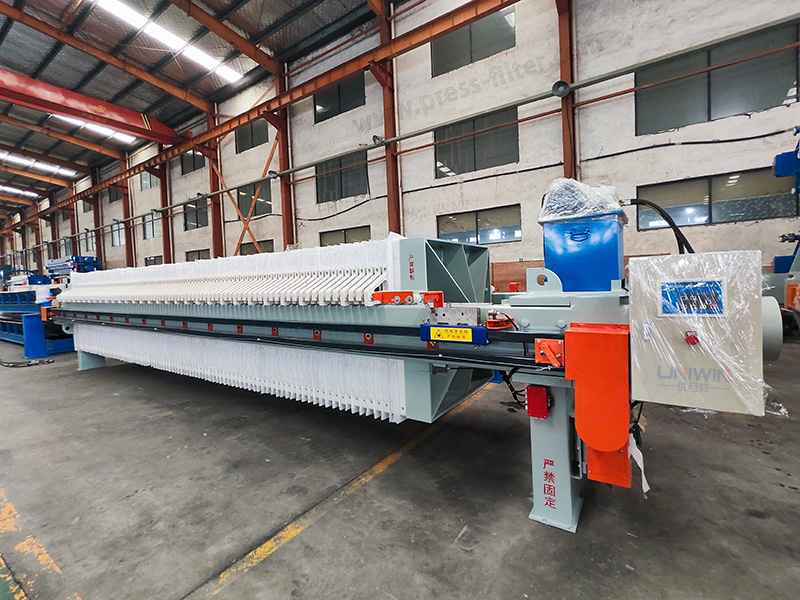
Why is Filter Press Selection More Complex in the Chemical Industry?
Compared to industries such as mining, sand and gravel, and municipal sludge, the filter press conditions in the chemical industry are more unique, mainly in the following aspects:
Highly corrosive materials
Chemical waste liquids, acid and alkali solutions, salt slurries, catalyst slurries, dye wastewater, etc., can cause corrosion to filter plates, frames, pipes, valves, and filter cloths.
Significant temperature variation
Some chemical slurries require filtration at high temperatures, while others are sensitive to temperature. Temperature changes can affect viscosity, filtration speed, and equipment sealing.
Large differences in solids content
Some materials have low solids content and long filtration cycles; others have high solids content, fine particles, and are prone to clogging, placing higher demands on the filter press structure and filter cloth precision.
High safety and environmental protection requirements
If the material has an irritating odor, is volatile, toxic, or flammable, a regular open-type filter press may not meet the site requirements, and a closed-type, automated, or corrosion-resistant filter press should be selected.
Determining Filter Press Selection Based on Corrosivity
Corrosivity is one of the most important factors in selecting filter presses in the chemical industry. Different acidity/alkalinity, different solvent systems, and different salt concentrations will all affect the choice of equipment materials.
- Weak acid, weak alkali, and general chemical wastewater: Polypropylene filter plates, carbon steel frame with anti-corrosion coating.
- Strongly acidic materials: Reinforced polypropylene filter plates, wetted parts made of anti-corrosion materials.
- Strongly alkaline materials: Alkali-resistant filter cloth, anti-corrosion piping, and seals.
- High-salt and high-chlorine materials: Avoid ordinary stainless steel for wetted parts; prioritize plastic, rubber-lined, or special alloy components.
- Materials containing organic solvents: Select a gasketed filter press; if necessary, configure an explosion-proof electrical control system.
- Materials with irritating odors or toxicity: Fully gasketed filter press recommended.
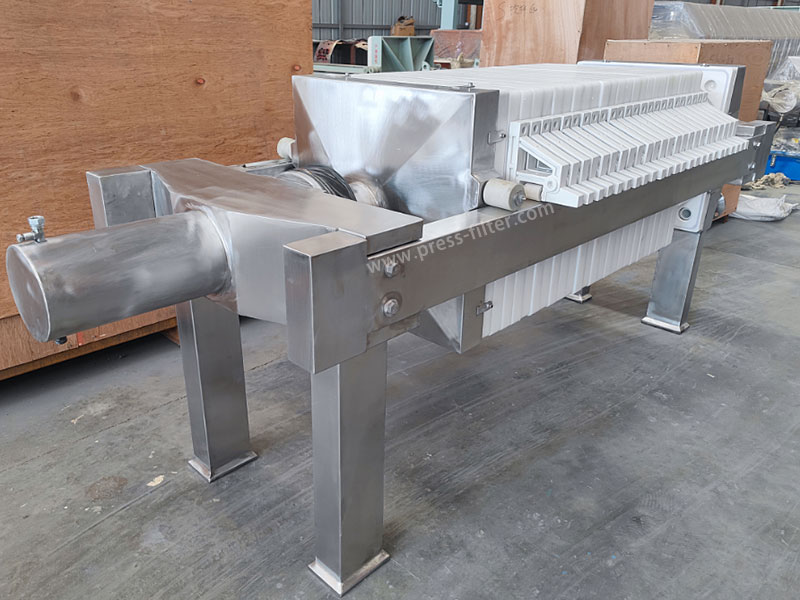
Determining Filter Press Selection Based on Temperature
Temperature directly affects the filtration efficiency, sealing effect, and service life of a filter press. In the chemical industry, the temperature of common materials can range from room temperature to 80℃, 100℃, or even higher. The selection criteria completely differ under different temperature conditions.
- If the material temperature is close to room temperature and it is not particularly corrosive, a conventional plate and frame filter press, chamber filter press, or diaphragm filter press can generally be selected.
- For filtering high-temperature materials, it is not recommended to select the filter press solely based on its theoretical temperature resistance. This is because actual operation is also affected by factors such as feed pressure, filtration cycle, material corrosivity, and cleaning frequency. The higher the temperature, the higher the requirements for filter plate strength, filter cloth performance, and overall machine sealing.
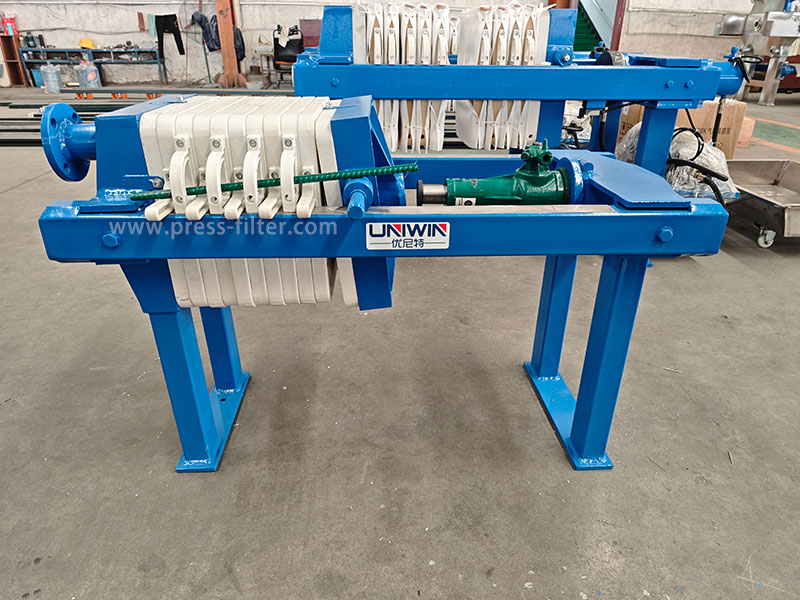
Selecting a Filter Press Based on Solids Content
The solids content determines the filtration cycle, filter chamber volume, feed pressure, and final processing capacity of a filter press. In the chemical industry, the solids content varies greatly among different slurries.
- Materials with low solids content typically have more liquid and fewer solids, resulting in a longer time for filter cake formation per batch. For materials with low solids content, it is advisable to consider adding sedimentation, concentration, flocculation, or pretreatment processes before filter pressing to increase the solids concentration entering the filter press.
- Materials with medium solids content are common filtration targets in the chemical industry, typically exhibiting stable filtration efficiency, making chamber filter presses or diaphragm filter presses suitable choices. If customers require even lower filter cake moisture content, diaphragm filter presses can be selected. After initial filtration, diaphragm filter presses further reduce filter cake moisture through a secondary pressing process.
- Materials with high solids content often exhibit poor flowability due to their high solids content. For such materials, it is recommended to conduct small-scale or field tests. These tests can determine the filtration rate, filter cake thickness, discharge efficiency, and filter cloth regeneration performance, thus preventing the equipment from failing to achieve the expected processing capacity after being put into operation.
Conclusion
In chemical solid-liquid separation projects, a suitable filter press can improve filtration efficiency, reduce filter cake moisture content, decrease filter cloth wear, and enhance the safety and environmental protection of the production site. For highly corrosive, high-temperature, and unstable solid content chemical materials, it is recommended not to rely solely on experience for selection, but rather to make a comprehensive judgment based on material parameters, on-site operating conditions, and filtration test results.