
 English
  French
  Spanish
  Turkish
  Russian
 Reasons for Significant Price Differences in Filter Presses
When purchasing filter presses, different manufacturers offer different prices. This does not necessarily mean that a particular manufacturer has a higher profit margin, nor does it mean that a low-priced device is always a good deal.
Filter presses are industrial filtration equipment, and price differences often stem from various factors such as equipment type, filtration area, filter plate configuration, frame material, level of automation, and supporting equipment.
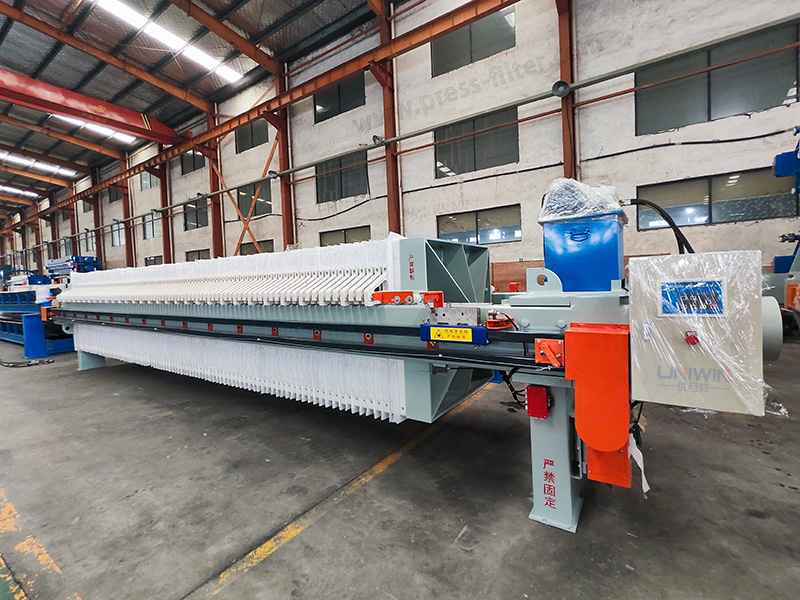
Different Types of Filter Presses
Filter presses are not limited to a single type. Different structures result in varying manufacturing costs and performance.
Common types include:
- Chamber Filter Press
- Plate and Frame Filter Press
- Diaphragm Filter Press
- Stainless Steel Filter Press
- Cast Iron Filter Press
- Vehicle-Mounted Filter Press
- Round High-Pressure Filter Press
Ordinary chamber filter presses are primarily used for conventional solid-liquid separation, while diaphragm filter presses can perform secondary pressing after initial filtration, further reducing the moisture content of the filter cake. Because diaphragm filter plates, pressing systems, and control systems are more expensive, diaphragm filter presses are generally more expensive than ordinary filter presses.
If the material being processed is corrosive, stainless steel cladding, anti-corrosion coatings, or special material structures may be required, all of which increase costs.
Therefore, when comparing quotes, the first step is to confirm whether the types of filter presses quoted by different manufacturers are consistent.
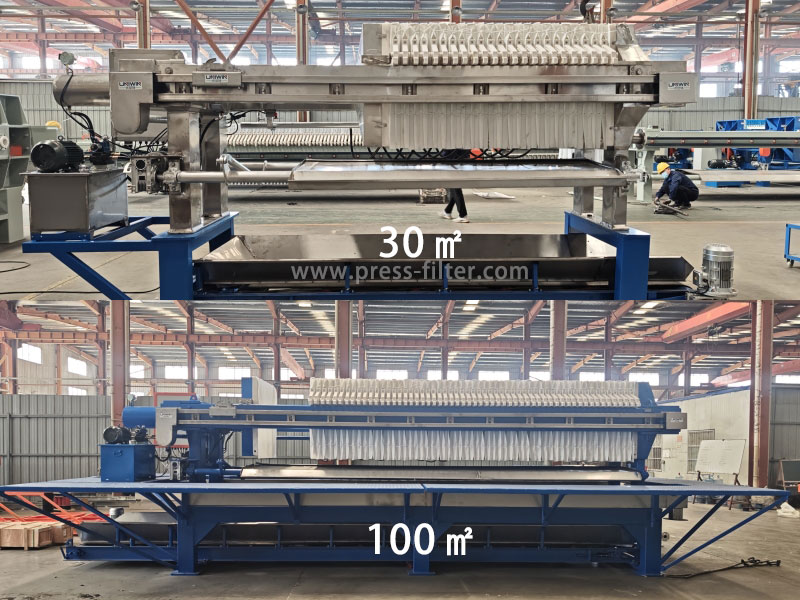
Different Filtration Areas
The filtration area is a crucial factor affecting the price of a filter press. A 30㎡ filter press and a 100㎡ filter press will differ in frame size, number of filter plates, hydraulic system, equipment weight, and processing capacity, naturally resulting in different prices.
Key factors to confirm:
- Filtration area
- Filter plate size
- Number of filter plates
- Filter chamber volume
- Filter cake thickness
If you only look at the filtration area or the total equipment price, it’s easy to overlook the differences in actual configuration.
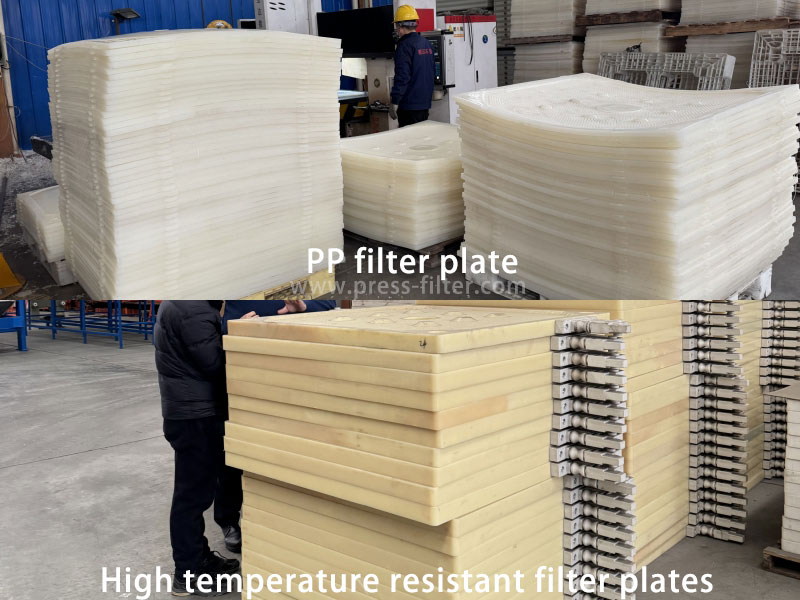
Filter Plate Quality
Filter plates are one of the core components of a filter press, directly affecting filtration efficiency, sealing performance, service life, and operational stability.
The quality of filter plates can vary significantly across different pricing options:
- Ordinary PP Filter Plates
- Reinforced PP Filter Plates
- High-Temperature Resistant Filter Plates
- Acid and Alkali Resistant Filter Plates
- Diaphragm Filter Plates
For industries such as sludge dewatering, chemical wastewater treatment, mining, food processing, and metallurgy, filter plate quality should not be overlooked. Frequent filter plate damage not only increases replacement costs but also disrupts production continuity.
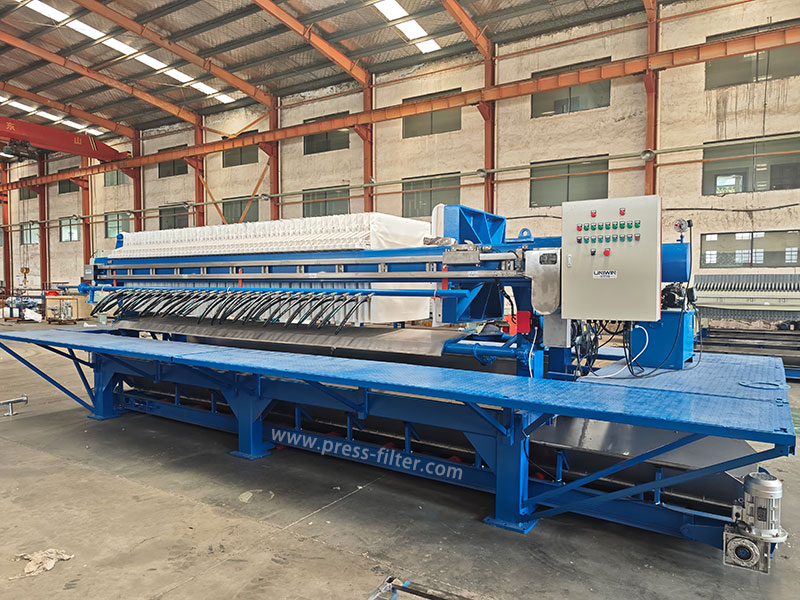
Different Levels of Automation
The higher the level of automation in a filter press, the more significant the price difference.
Common automation features include:
- Automatic plate shifter
- Hydraulic automatic pressing and pressure holding
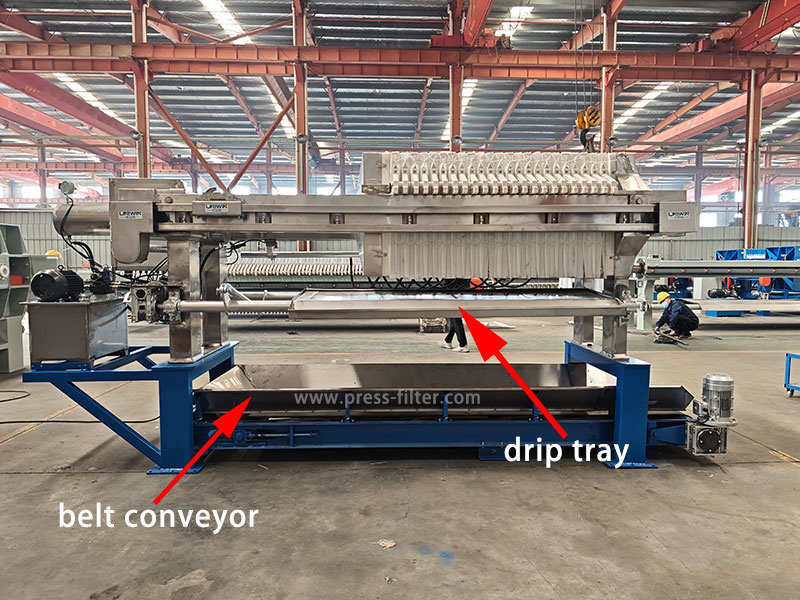
- Drip tray
- Belt conveyor
- Automatic filter cloth washing system
- PLC control system
- Safety protection devices
Automation reduces manual operation, improves on-site cleanliness, and increases operational efficiency. Therefore, when comparing prices, it’s crucial to check if the quote includes these automation features, rather than just looking at the price of the main unit.
Does It Include Auxiliary Equipment?
Some manufacturers’ quotes only include the filter press itself, while others include the entire filtration system.
Common auxiliary equipment includes:
- Feed pump
- Air compressor
- Air storage tank
- Agitator
- Dosing system
- Pipelines and valves
- Filtrate collection tank
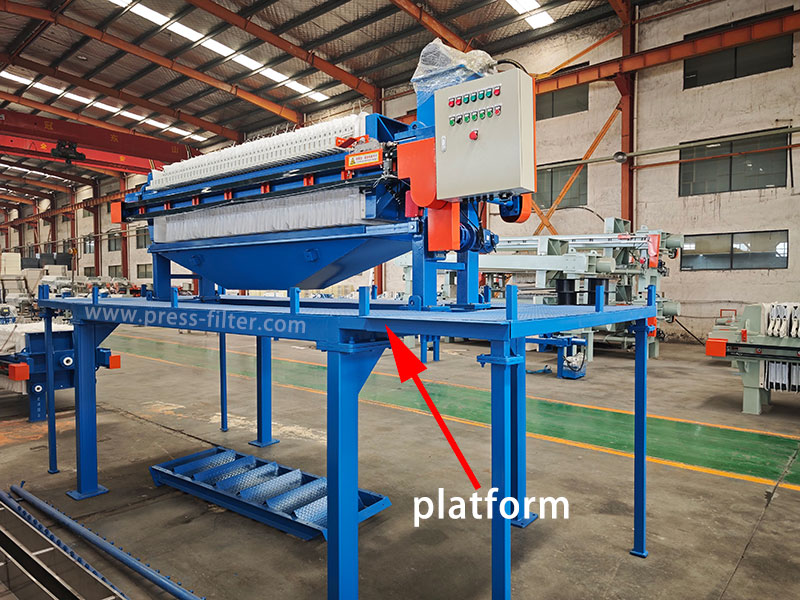
- Platform and guardrails
- Spare filter cloth and consumable parts
Therefore, when comparing quotes, buyers should not only look at the final amount, but also check each item on the quote to confirm which equipment is included and which needs to be purchased separately.
The Hydraulic and Electrical Control Systems Differ in Configuration
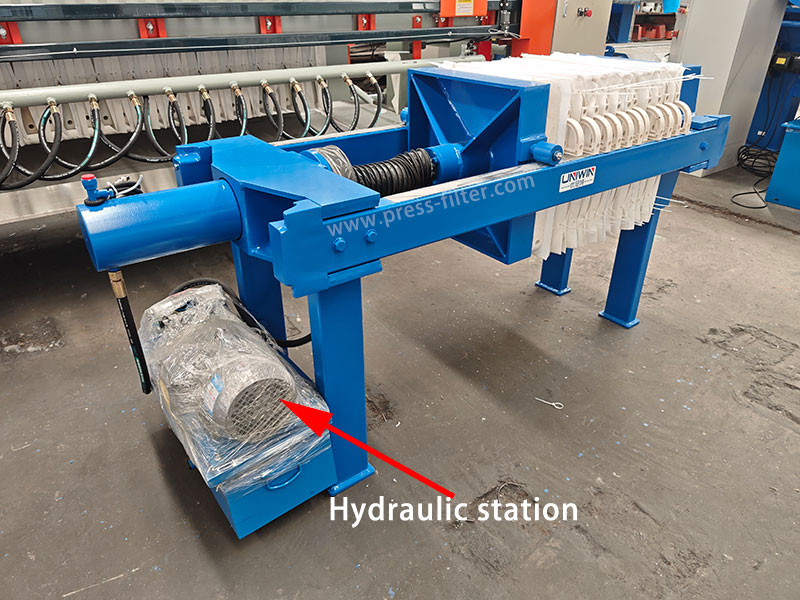
The hydraulic system is responsible for pressing the filter plates and is a crucial part of the stable operation of the filter press. The electrical control system, on the other hand, affects ease of operation, safety, and automation.
Price differences may stem from:
- Cylinder specifications
- Hydraulic station configuration
- Hydraulic valve brand
- Motor power
- PLC brand
- Electrical component brand
Lower-priced equipment may have reduced specifications for these components. While this may not cause obvious problems in the short term, long-term operation will gradually reveal issues such as unstable hydraulic pressure holding, sluggish operation, and electrical control malfunctions.
Packaging and Shipping Costs Differ
For export projects, packaging and shipping are also part of the cost.
Points to consider:
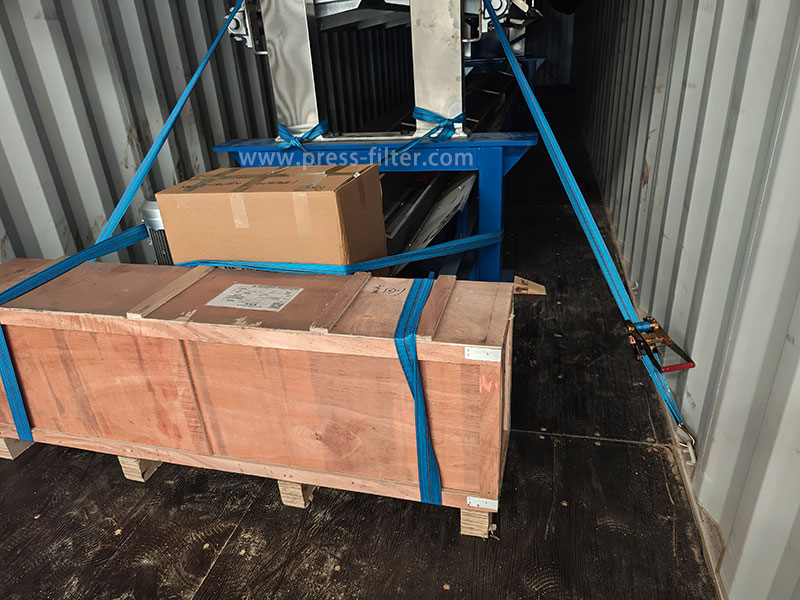
- Whether wooden crates are used for packaging.
- Whether rust prevention treatment is applied.
- Whether the equipment is securely fixed.
- Whether an English instruction manual is provided.
- Whether an installation video is provided.
- Whether remote guidance is provided.
Some quotes may seem cheap, but they do not include packaging, spare parts, installation guidance, or after-sales service. If problems arise later, the customer may incur additional costs.
Conclusion
When selecting a filter press, it is recommended not only to compare the total price, but also to compare the configuration, materials, functions, and services item by item. This will help avoid the risks associated with lower prices later on and ensure that you choose filtration equipment more suitable for your actual production needs.
If you are unsure which filter press to choose, please provide the material name, throughput, solids content, temperature, and target moisture content. We can then recommend a suitable filter press model and configuration based on your specific operating conditions.