
 English
  French
  Spanish
  Turkish
  Russian
 How to Reduce Filter Press Operating Costs
Reducing filter press operating costs requires more than just looking at electricity consumption. It also necessitates controlling factors such as feeding time, filter cake moisture content, filter cloth lifespan, reagent consumption, labor costs, and equipment failure rate. This can typically be addressed from the following aspects.
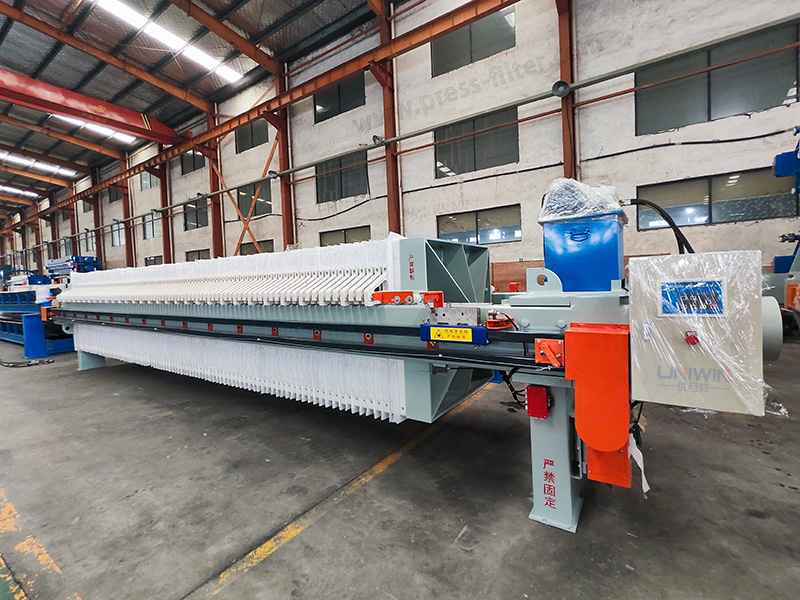
Shorten the Filtration Cycle
The longer the filter press’s operating cycle, the higher the cost of treating a unit of sludge or material. While ensuring filtration efficiency, appropriately shortening the feeding, pressing, blowing, and discharging times can increase the daily processing capacity.
Increase the Feed Concentration
If the material’s solids content is too low, the filter press will process large amounts of water for extended periods, increasing pumping time and power consumption. The feed concentration can be increased through sedimentation, thickening tanks, sludge thickeners, or pre-dewatering equipment.
However, higher concentrations are not always better; excessive viscosity can also lead to feeding difficulties. A suitable range needs to be determined based on the material’s characteristics.
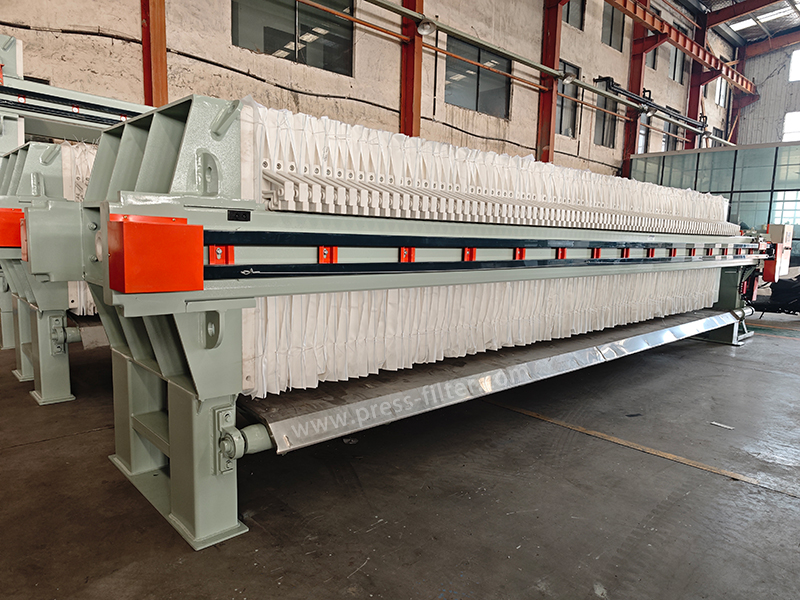
Choosing the Right Feed Pump
An oversized feed pump will increase energy consumption and affect the filter plates and pipelines; an undersized pump will prolong the feeding time.
Common choices include diaphragm pumps, screw pumps, centrifugal pumps, and ceramic plunger pumps. The pump’s flow rate, head, and pressure should be matched to the filter press’s filtration area, filter chamber volume, and material properties.
Reduce Filter Cloth Clogging and Frequent Replacement
Clogged filter cloths significantly reduce filtration speed, increase feed pump running time, and may cause uneven moisture content in the filter cake.
Solutions:
- Select filter cloth material based on material particle size, pH, and temperature.
- Clean filter cloth regularly.
- Control flocculant dosage to avoid excessive agent adhering to the filter cloth.
- Check that the filter cloth is installed evenly.
Higher air permeability is not always better for filter cloths. Excessive air permeability allows fine particles to pass through the filter cloth, while insufficient permeability reduces filtration speed.
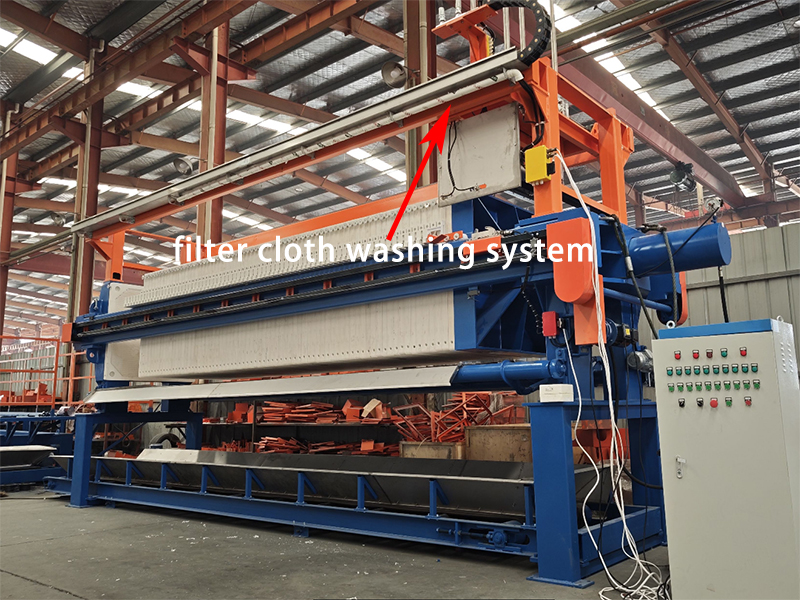
Reducing the Moisture Content of Filter Cake
The moisture content of filter cake directly affects subsequent transportation, storage, drying, and disposal costs. Especially in sludge and mine tailings projects, every reduction in filter cake moisture content can significantly reduce transportation and processing costs. If the budget allows, diaphragm or high-pressure filter presses can be selected to further reduce the filter cake moisture content.
However, longer pressing time is not always better. When the filter cake moisture content has essentially stopped decreasing, continuing pressing will only increase electricity consumption and compressed air costs.
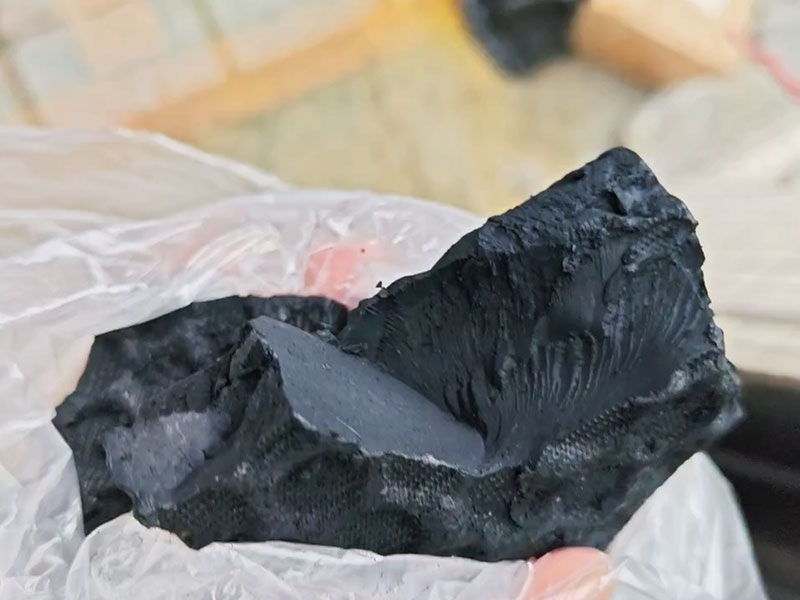
Properly Control Flocculant Addition
Insufficient flocculant will result in poor particle retention and slow filtration; excessive flocculant addition will not only increase costs but may also cause filter cloth clogging, sticky filter cake, and difficulty in cake discharge.
It is recommended to determine the flocculant dosage through testing. A fixed dosage should not be followed long-term, as the feed concentration and material properties may change.
Increase Automation
For projects with high throughput, automation can significantly reduce long-term labor costs. Configurable:
However, small projects may not necessarily require full automation; the choice should be based on daily batch sizes, labor costs, and site conditions.
Maintenance and Upkeep
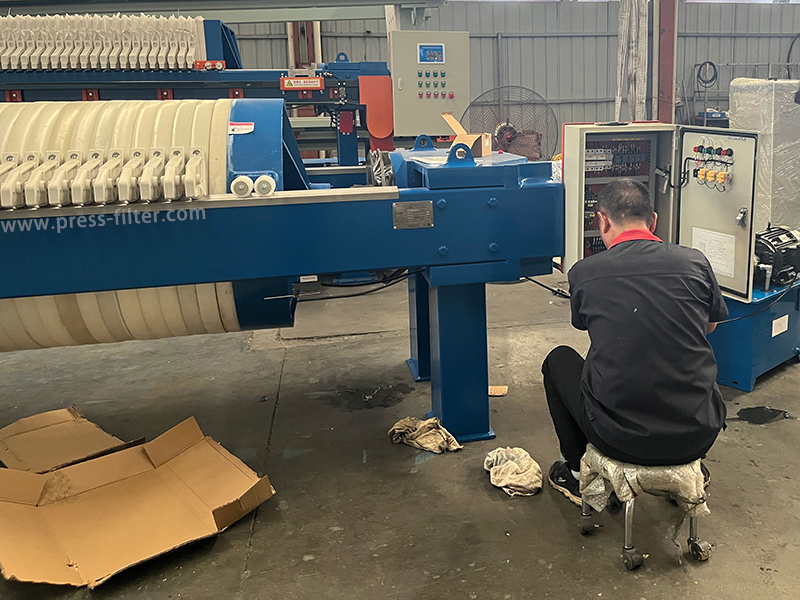
Regular maintenance is generally less expensive than downtime repairs due to equipment failure. Focus on inspecting filter plates, filter cloths, hydraulic cylinders, plate pulling mechanism, feed pump, valves, and pressure gauges. These issues not only increase repair costs but can also damage an entire batch of filter plates.
Conclusion
The key to reducing filter press operating costs is not simply reducing equipment power, but rather ensuring the filter press produces more, drier, and easily removable filter cakes in a shorter time.
If you have any related questions, please feel free to contact us; we will provide you with a reasonable solution.