
 English
  French
  Spanish
  Turkish
  Russian
 How To Select the Filter Press For Mine Tailings Treatment?
Mine tailings treatment is typically characterized by significant fluctuations in slurry concentration, fine particle sizes, high processing volumes, and the need for prolonged continuous operation. For mining enterprises, selecting the appropriate filter press affects not only filter cake moisture content and sludge discharge efficiency but also downstream transportation costs, equipment maintenance expenses, and on-site operational stability.
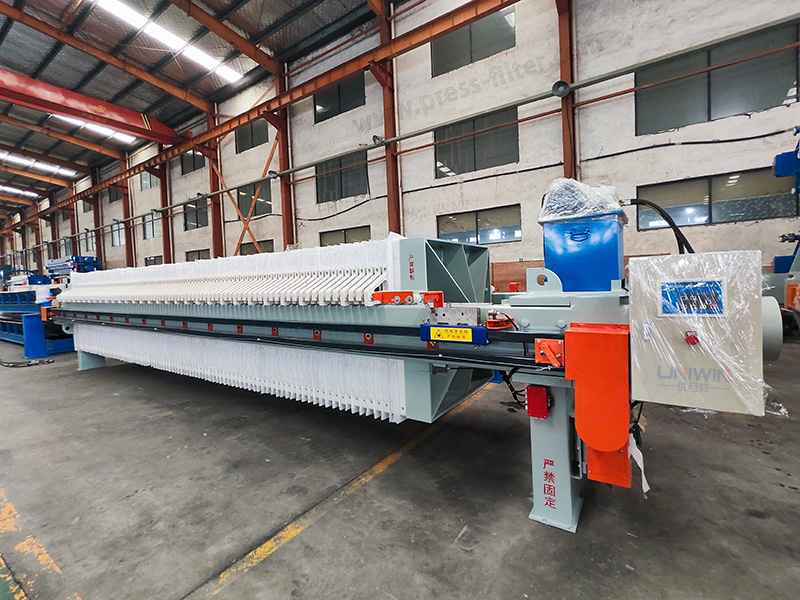
Determine the Basic Properties of the Slurry
Tailings properties vary significantly across different types of mines—such as gold, iron, and copper mines—in particle size, settling velocity, solids content, corrosiveness, and filtration difficulty.
Before selecting equipment, it is recommended to verify the following parameters:
- Material name and source
- Slurry solids content
- Required processing capacity (hourly or daily)
- pH value and corrosiveness
- Target filter cake moisture content
- Requirement for continuous operation
If the tailings consist of coarser particles with good filtration characteristics, a standard recessed-plate (chamber) filter press is suitable. If the tailings consist of finer particles and a lower moisture content is required, a membrane filter press or a high-pressure filtration system is generally recommended.
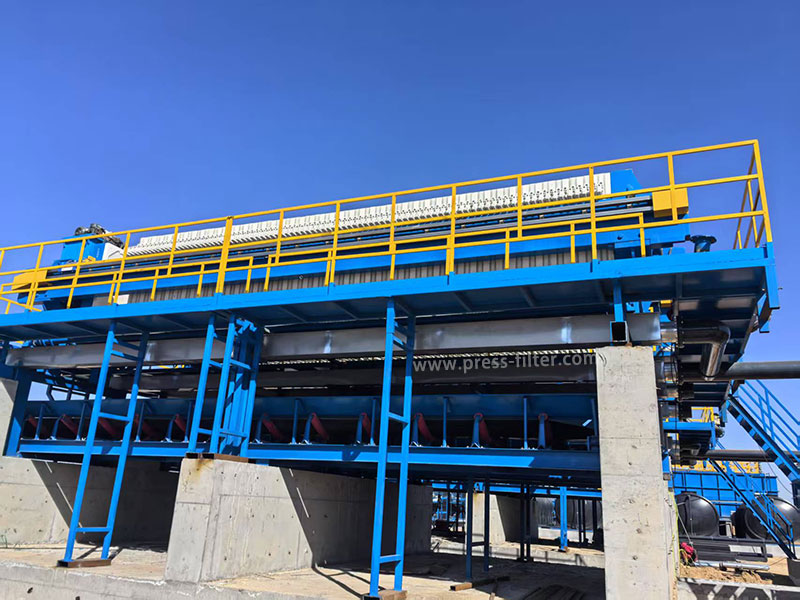
Selecting the Appropriate Filtration Area
Filtration area is a key parameter when selecting a filter press. An insufficient filtration area results in low processing capacity per batch, frequent cake discharge, and a heavy operational workload; conversely, an excessive filtration area can lead to higher investment costs and underutilization of the equipment.
When making a selection, one should not rely solely on a simple estimate based on “slurry volume.” Instead, calculations must factor in the slurry’s solids content, the filtration cycle, feed pump efficiency, filter cake thickness, and daily operating hours.
Chamber Filter Press or Membrane Filter Press?
Both chamber filter presses and membrane filter presses are commonly used in mine tailings treatment, though they are suited to different applications.
Chamber filter press
The chamber filter press features a mature design and relatively low cost; it is suitable for tailings treatment projects where the material has good filtration characteristics, and the requirement for filter cake moisture content is not particularly stringent.
Advantages
- Simple equipment structure
- Lower procurement cost
- Easy maintenance
- Suitable for most standard tailings slurries
Membrane filter press
Following the initial feed filtration stage, a membrane filter press allows for a secondary squeezing process to further reduce the moisture content of the filter cake. Membrane filter presses offer distinct advantages for applications involving fine-particle tailings, high-moisture sludge, or projects where transportation costs are a significant factor.
Advantages
- Lower filter cake moisture content
- Improved cake discharge performance
- Higher single-cycle filtration efficiency
- Better suited for fine-particle and hard-to-filter materials
If a project requires low filter cake moisture content or aims to reduce costs associated with tailings transportation and storage, a membrane filter press is the recommended choice.
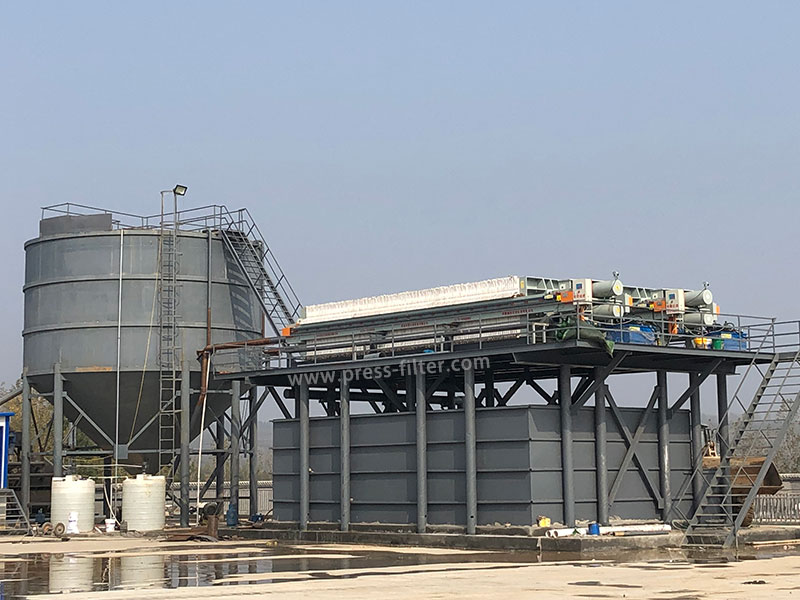
Feed Pump Selection
Mine tailings typically contain a significant amount of solid particles, placing high demands on the pump’s wear resistance. Common pump types used for this application include slurry pumps, plunger pumps, and diaphragm pumps.
Tailings processing requires a high flow rate during the initial feed stage, followed by the maintenance of stable pressure in the later stages to ensure the filter chambers are fully filled and a drier filter cake is formed. Insufficient pump pressure can result in excessively wet filter cakes, while excessive pressure or improper control may compromise the service life of the filter plates and filter cloths.
Selection of Filter Plate Material
Operating conditions for mine tailings treatment are typically demanding, requiring equipment to run for extended periods; therefore, the quality of the filter plates is crucial.
Reinforced polypropylene is a common material for filter plates, offering excellent resistance to pressure, corrosion, and fatigue. For high-pressure filtration or membrane squeezing applications, filter plates with higher pressure ratings should be selected.
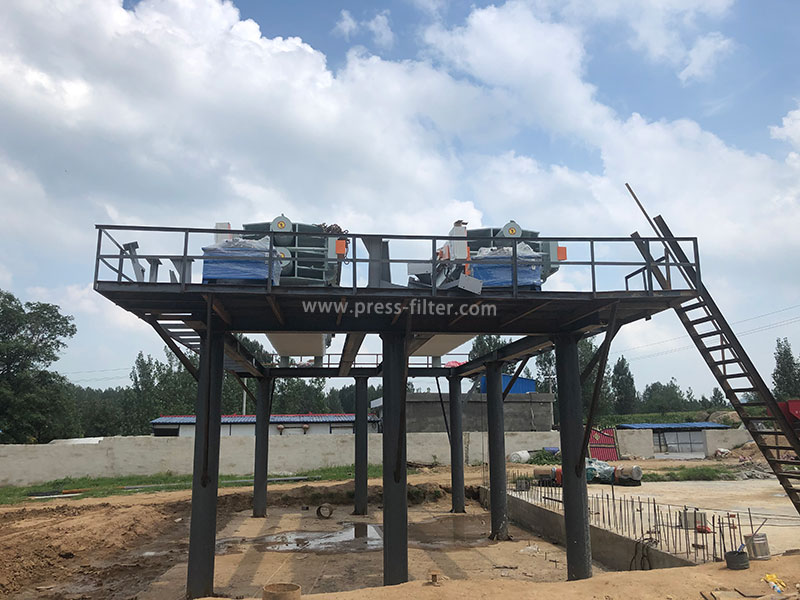
Filter Cloth Selection
The filter cloth is a critical component determining the filtration performance of a filter press. Mining tailings consist of fine, highly abrasive particles; using an unsuitable filter cloth type can lead to issues such as slow filtration rates, turbid filtrate, cloth blinding, and difficulty in cake discharge.
For fine-grained tailings, a filter cloth that is too tight reduces filtration speed, while one that is too loose compromises filtrate clarity. Therefore, it is best to select the appropriate filter cloth type based on material test results.
Automated Configuration
Mine tailings treatment equipment is typically large in size and features a high number of filter plates. Relying entirely on manual plate shifting and cake discharge results in high labor intensity and inconsistent efficiency.
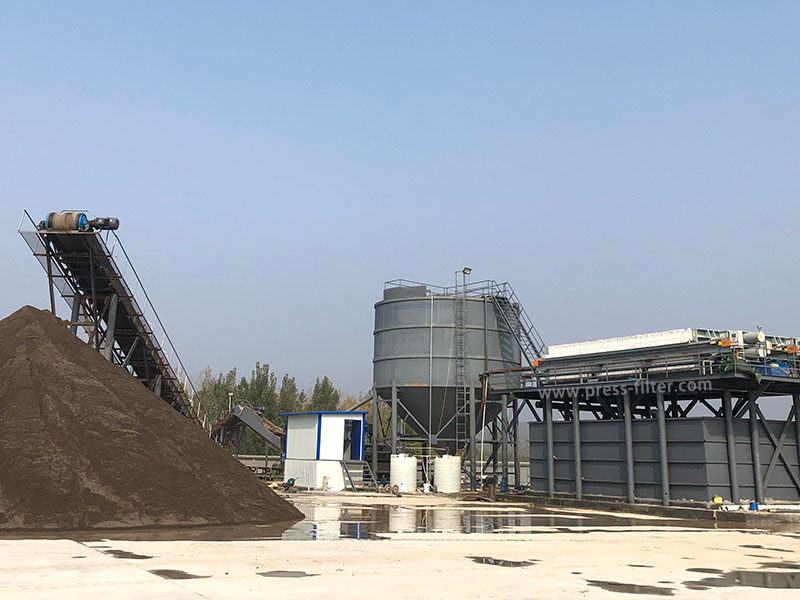
For small-scale projects, a semi-automated configuration may be selected to reduce procurement costs. For medium- to large-scale mine tailings projects, however, it is recommended to install a plate shifter, a drip tray, and belt conveyors to enhance cake discharge efficiency and minimize manual labor.
If the filter cloths are prone to clogging, the addition of a filter cloth washing system should also be considered to maintain long-term filtration efficiency.
Conclusion
Selecting the right filter press for mine tailings treatment requires a comprehensive evaluation of factors such as tailings characteristics, processing capacity, moisture requirements, feed pressure, and the level of automation.
If you are unsure which filter press model is best suited for your tailings project, please provide us with details regarding the material, daily processing capacity, slurry concentration, and required filter cake moisture content. Our engineers will recommend a suitable filter press solution tailored to your specific operating conditions.