
 English
  French
  Spanish
  Turkish
  Russian
 Methods for Opening Filter Plates in Filter Presses
The method for opening the filter plates in a filter press mainly depends on the type and degree of automation of the filter press. The following are some common methods for opening the filter plates.
Manual Plate Pulling
Working principle
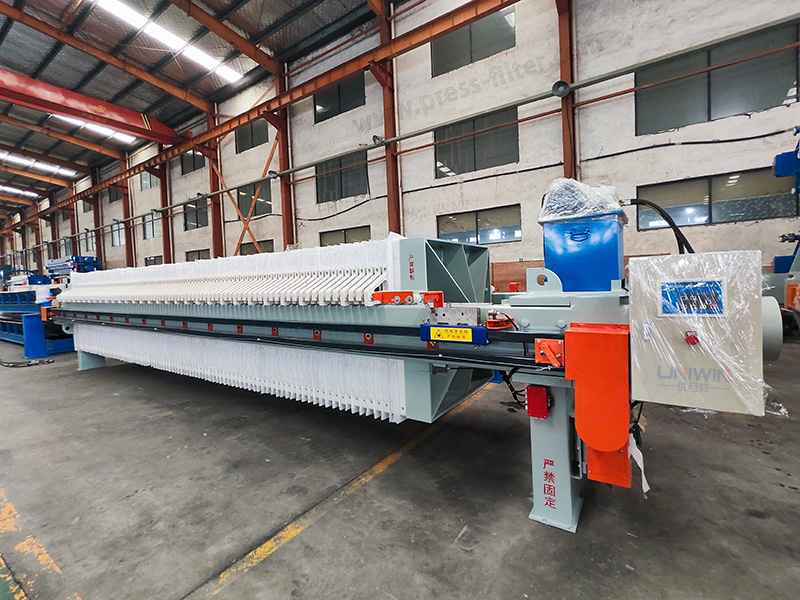
The manual plate pulling method relies on manual operation to pull the filter plates one by one to complete the discharge process. The plate and frame filter press uses a manual method for opening the filter plates. After the filtration process is completed, the pressing mechanism (hydraulic cylinder) of the filter press is released, and the pressing force between the filter plates is removed. At this point, the operator pulls the filter plates apart along the guide rails, allowing the filter cake sandwiched between the plates to fall naturally into the receiving device or conveyor system at the bottom due to gravity. The entire plate pulling and discharge process is completely controlled manually and does not involve any electrical control or automatic driving devices.
Advantages:
- Simple equipment structure and low cost.
- Easy maintenance, not dependent on automated systems.
- Low failure rate and intuitive operation.
Disadvantages:
- High labor intensity and low efficiency;
- Long unloading time when there are many filter plates.
- Unable to meet the requirements for high-frequency or continuous operation.
- There are certain safety risks that require adherence to operating procedures.
Standard Automatic Plate Shifting System
Working principle
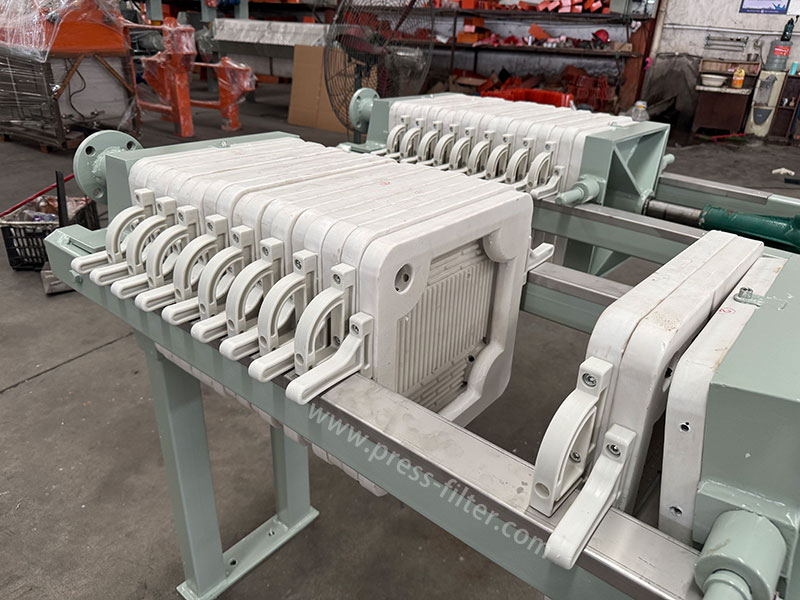
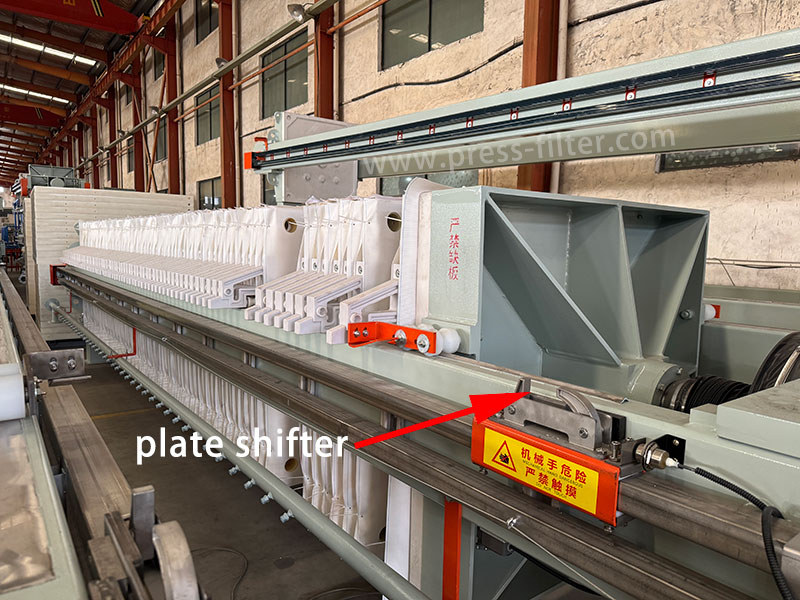
This system achieves automatic opening of the filter plates through a plate shifter installed on the upper beam. After filtration is complete, the filter press automatically releases the clamping device. The plate shifter, under the command of the PLC control system, starts and moves along the guide rail to the position of the first filter plate. It then uses its grippers to clamp the filter plate handle and pull it to one side.
After the filter cake falls off, the plate shifter continues to the next filter plate, repeating the above actions until all filter plates are opened and the discharge is completed. This system is usually equipped with position sensors and limit switches to achieve precise control of the plate shifting action.
Advantages:
- Significantly reduces manual labor intensity and improves operational safety.
- Smooth operation and high precision of filter plate movement, suitable for most working conditions.
- Can be integrated with conveyor belts and mud cake collection systems to improve the overall automation level.
Disadvantages:
- Only one filter plate can be opened at a time, resulting in limited discharge efficiency.
- The electrical control system requires regular maintenance and has a certain risk of malfunction.
- The discharge process is still time-consuming when there are a large number of filter plates.
Quick-Opening Filter Plate System (Multiple Plates Linked)
Working principle
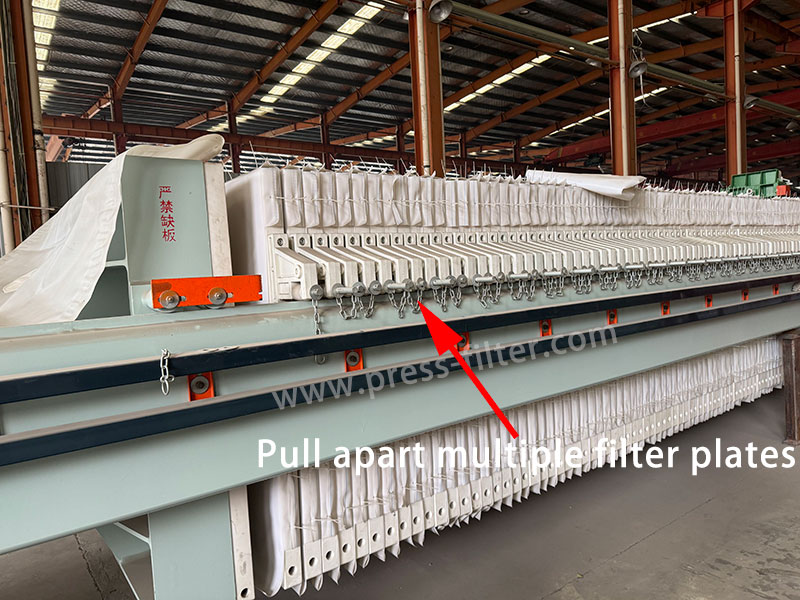
The quick-opening filter plate system connects multiple filter plates together using chains. After filtration is complete, a drive system (motor, hydraulic cylinder, etc.) simultaneously pulls open multiple filter plates, achieving group-linked discharge and further improving the efficiency of filter cake removal. The entire process is automated, significantly increasing processing efficiency.
Advantages:
- Fast filter plate opening speed and extremely high discharge efficiency.
- Suitable for industrial applications with a large number of filter plates, short filtration cycles, and high processing capacity.
- The system supports highly automated operation and allows for remote control and monitoring.
- When combined with conveying, cleaning, and other functional modules, a fully automated filter press production line can be achieved.
Disadvantages:
- Complex structure and high initial investment.
- Requires high precision and synchronization of the linkage mechanism.
- Repair work is relatively complicated if the chain or connecting parts are damaged.
- System maintenance relies on professional technicians, resulting in slightly higher operating costs.
Conclusion
The three filter plate opening methods each have their own advantages and are suitable for different operating conditions. In actual selection, a comprehensive consideration of processing capacity, automation requirements, labor costs, and equipment investment should be taken into account to choose the opening method that best suits the specific process.