 English
  French
  Spanish
  Turkish
  Russian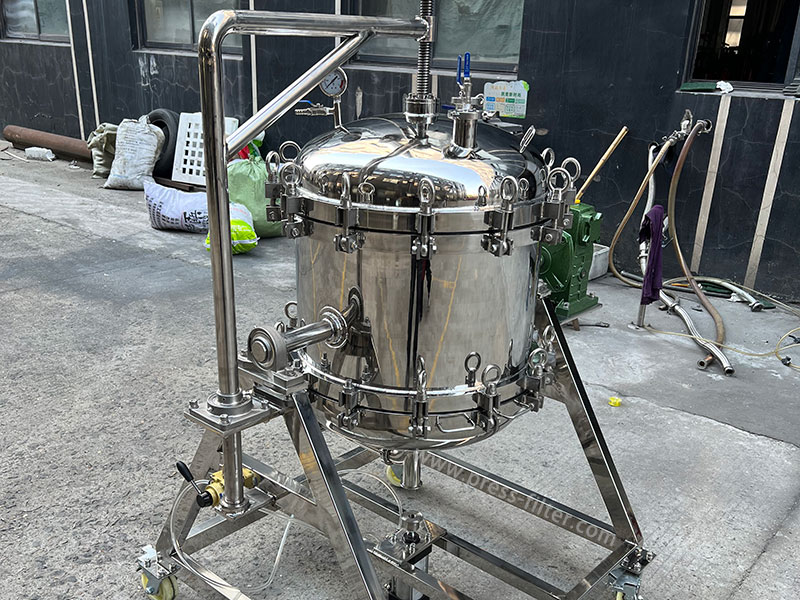
Positive Pressure Filter
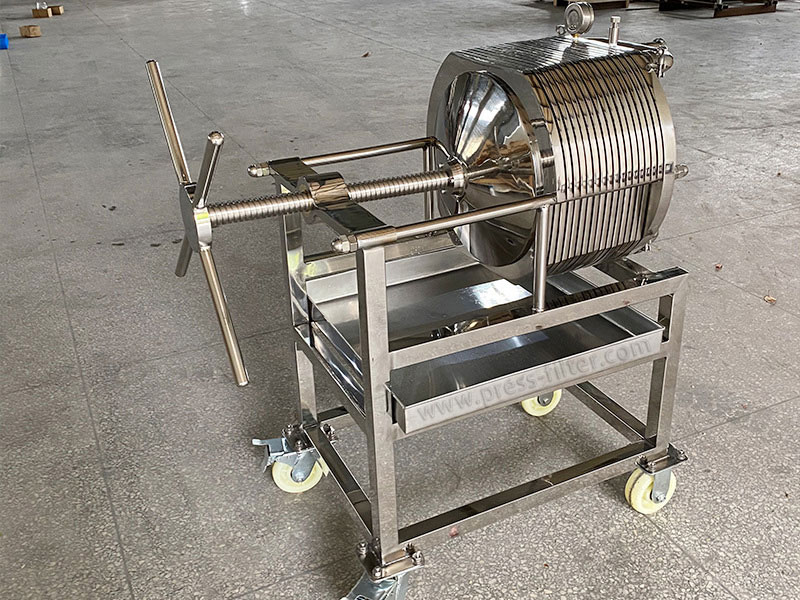
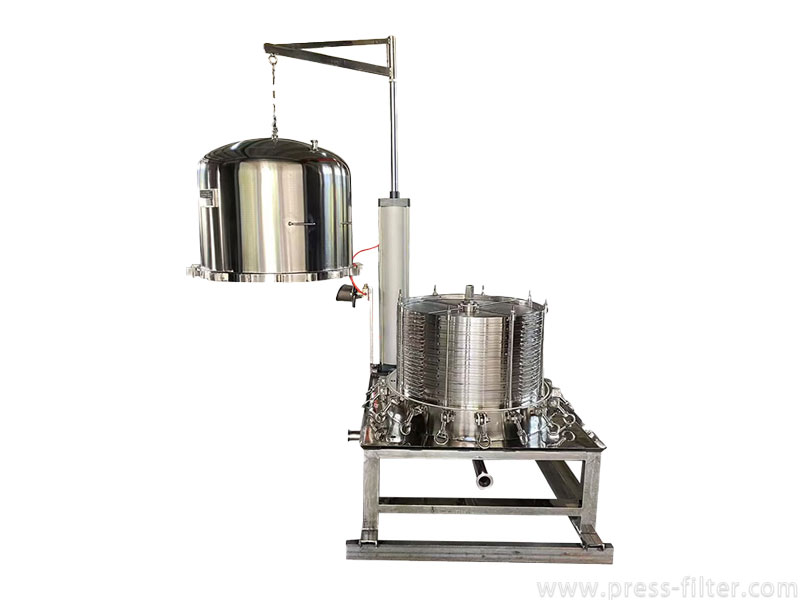
The positive pressure filter is a stainless steel barrel filter, suitable for small-capacity research, hospitals, laboratories, and other units for the clarification and sterilization of various liquids.
This filter is particularly suitable for various microporous membranes and can be used with vacuum pumps and air compressors for suction filtration and pressure filtration, as well as with general pumps. It can also be used as a plate and frame multilayer filter and for residual liquid filtration in closed liquid preparation and circulation units, saving raw materials and achieving the advantage of multi-purpose functionality.
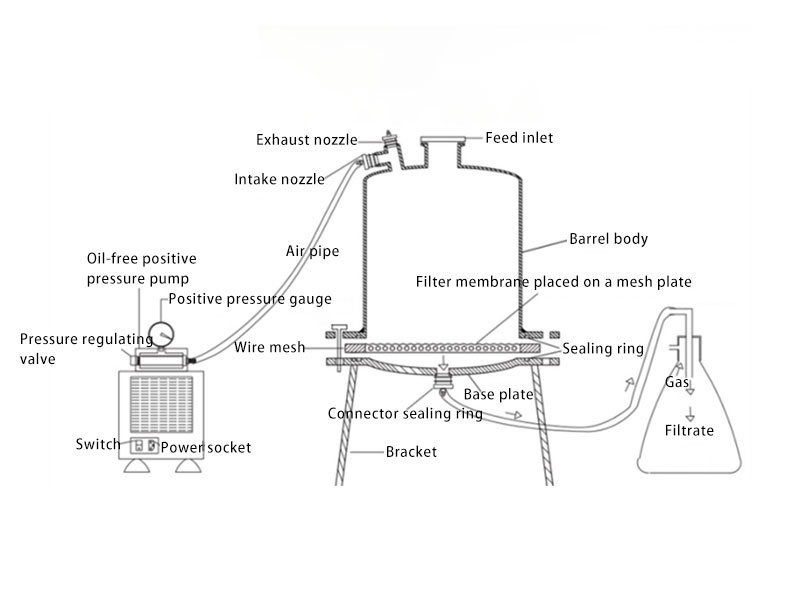
Positive Pressure Filter Structure
- Built: The main container, holding the liquid to be filtered.
- Inlet: The feed port, connecting to the upstream process or feed tank.
- Exhaust Port: Used to discharge gases generated or remaining during the filtration process.
- Air Inlet: The positive-pressure air inlet is connected to a compressed air or nitrogen source.
- Air supply system: Includes an oil-free air pump, positive pressure gauge, and pressure regulating valve, used to apply pressure to the tank.
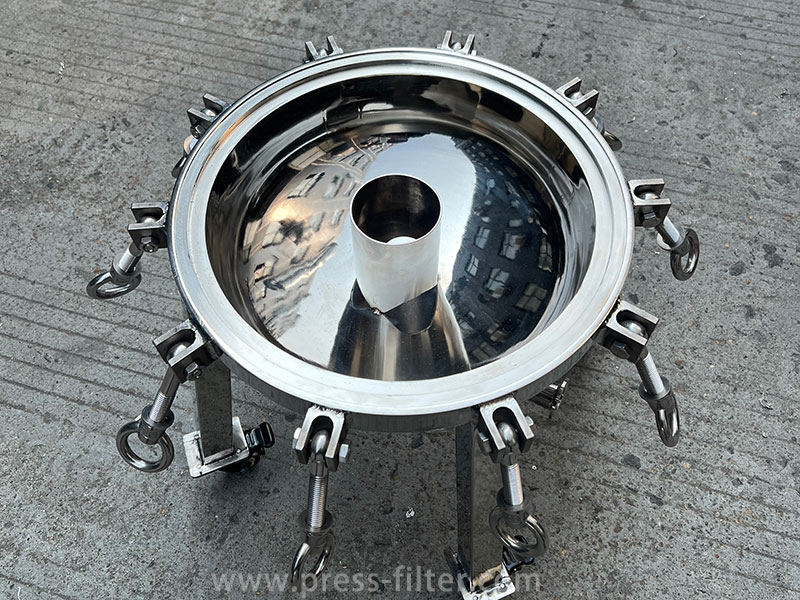
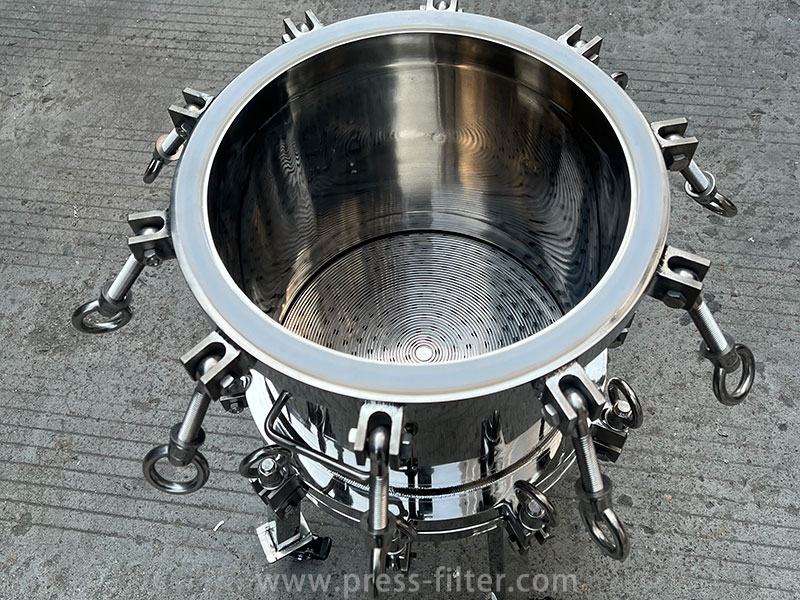
- Filter membrane + support mesh: The actual filter media, usually a microporous membrane or filter cloth, with a support structure to prevent its rupture.
- Bottom drain port: The filtered clear liquid drains through this port into the downstream or collection containers.
- Sealing structure: Ensures the entire system is leak-free under positive pressure.
- Support + chassis + casters: Improves equipment stability and facilitates movement and operation.
Positive Pressure Filter Drawing
Positive Pressure Filter Working Process
First, clean all components of the filter. Lay the microporous membrane flat in the center of the screen plate, align the filter body, screen plate, and funnel, then secure them with clamps. Insert the funnel into the filter flask and perform vacuum filtration under reduced pressure using a vacuum pump.
- Loading the Filtrate
Add the liquid to be filtered into the tank through the inlet. - Sealing the Tank
Close and tighten the lid to ensure a tight seal. - Applying Positive Pressure
Turn on the air pump or connect compressed gas, adjusting to the set pressure. The positive pressure will force the liquid through the filter membrane. - Filtration Process
The liquid, propelled by pressure, flows from top to bottom through the filter membrane. Filter residue is trapped on the membrane surface, while the clear liquid flows out. - Collecting the Filtrate
The filtrate flows through a bottom pipe into a collection container (such as a vacuum filtration flask), and the gas is discharged through the exhaust port. - Unloading and Cleaning
After filtration, open the equipment, remove the filter residue, clean the filter membrane, and prepare for the next use.
Advantages of Stainless Steel Positive Pressure Filters
- Closed-loop system design: Ensures no leakage and no contamination, suitable for filtering toxic or organic solvent-based materials.
- Positive pressure drive: Compared to traditional gravity or vacuum filtration, it offers faster processing speed and higher efficiency.
- Easy to move: Equipped with casters, it allows for flexible deployment within the workshop, improving operational convenience.
- Visualized pressure control: Equipped with a positive pressure gauge and regulating valve for precise control of filtration pressure, preventing filter membrane damage.
- Modular structure: Easy to maintain, replace filter media, or upgrade to a multi-layer filtration structure.
- Long service life: Made of high-quality stainless steel, corrosion-resistant and durable.
Precautions
Before use, all parts of the filter must be thoroughly cleaned. Generally, you can use dish soap to clean it, then rinse repeatedly with clean water, and finally wash it with distilled water before use.
When using, ensure the filter membrane is laid flat in the center of the mesh plate to prevent leakage.
Applications of Positive Pressure Filters
- Pharmaceutical industry: Filtration of activated carbon, decolorizing liquor, and mother liquor clarification.
- Food and beverage industry: Filtration of syrups, alcoholic beverages, and soy sauce concentrate.
- Fine chemical industry: Filtration of intermediates and catalyst residues.
- Environmental industry: Solid-liquid separation and treatment of liquid waste.