
 English
  French
  Spanish
  Turkish
  Russian
 How to Choose Filter Press Materials for Highly Corrosive Conditions?
In industries such as chemical, metallurgical, electroplating, and acid sludge treatment, filter presses frequently process corrosive materials. If the material selection is inappropriate, problems such as filter plate aging, frame corrosion, and pipeline damage can easily occur during operation, affecting not only filtration efficiency but also increasing subsequent maintenance costs.
Therefore, when selecting a filter press for highly corrosive conditions, it’s crucial not only to consider the equipment model and filtration area but also to focus on the material configuration of components such as filter plates, frames, pipelines, and valves.
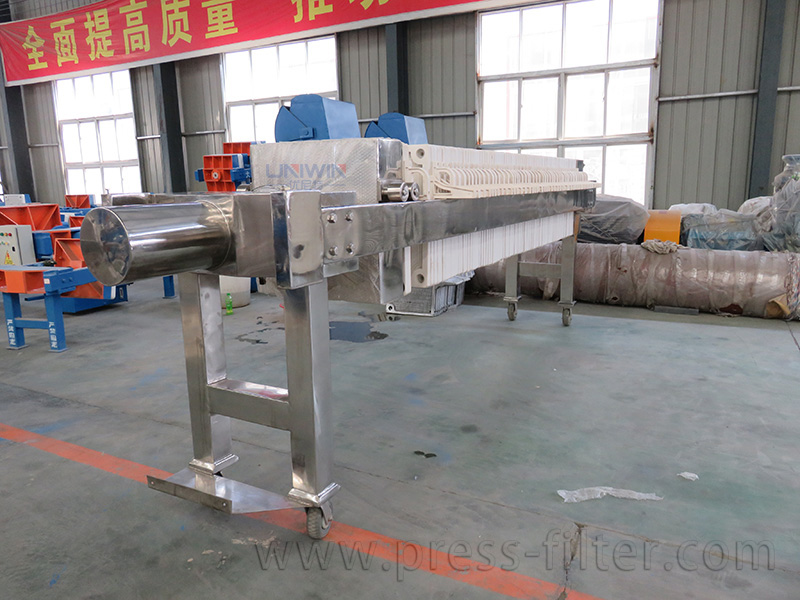
Why Do Highly Corrosive Operating Conditions Place Higher Demands on Filter Press Materials?
In highly corrosive environments, the material itself may contain acids, alkalis, salts, chloride ions, or other corrosive components. These media will be in constant contact with multiple parts of the equipment.
If the material’s corrosion resistance is insufficient, the following problems may occur:
- The filter plate surface will corrode or age, affecting sealing and filtration efficiency.
- The frame surface will rust and peel, severely impacting structural strength.
- Pipes and valves will corrode, leading to leaks or blockages.
- The filtrate collection groove, drip tray, and support legs will be eroded by corrosive filtrate.
- The filter cloth will harden and break, shortening its service life.
Therefore, selecting a filter press for highly corrosive conditions requires a holistic system-wide corrosion-resistant design, rather than simply choosing the material for a single component.
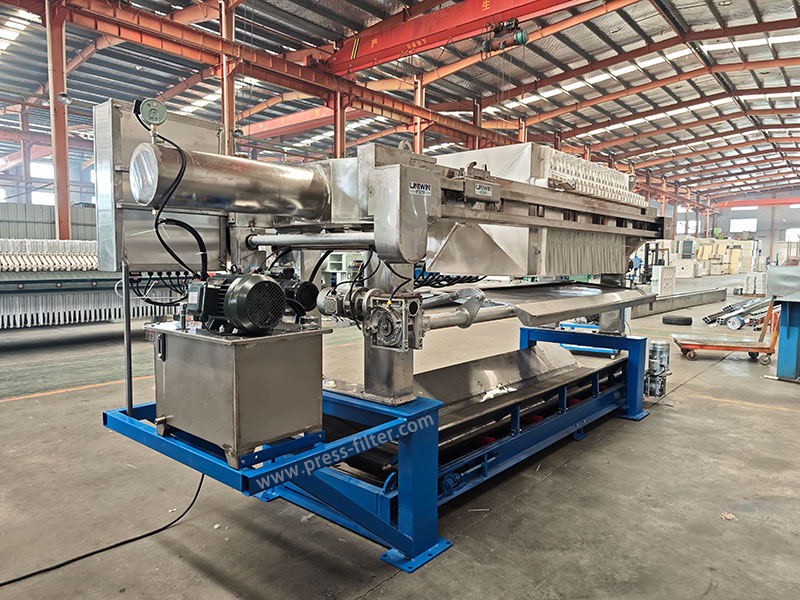
Filter Plate Material Selection
Filter plates are the core component of a filter press, directly contacting the material, and are a key consideration for material selection under highly corrosive conditions.
PP Polypropylene filter plates
PP polypropylene filter plates are a commonly used material in filter presses. They have good acid and alkali resistance, and their advantages include corrosion resistance, light weight, relatively reasonable cost, and wide applicability.
However, PP filter plates have limited high-temperature resistance. If the material temperature is high or the medium has strong oxidizing properties, it is necessary to further confirm its suitability for long-term use.
Reinforced pp filter plates
For applications with high operating pressure, high frequency of operation, or materials containing particles, where higher strength and deformation resistance are required, reinforced PP filter plates can be selected.
Compared to ordinary PP filter plates, reinforced PP filter plates offer higher strength and better stability, making them more suitable for continuous operation or heavy-load conditions.
Special corrosion-resistant filter plates
For highly corrosive chemicals, ordinary PP filter plates may not meet long-term usage requirements. In such cases, higher-grade corrosion-resistant materials, such as PVDF, PTFE, or other special materials, can be selected based on the specific medium.
These materials offer even stronger corrosion resistance but are also more expensive, and are generally used for special chemicals, highly corrosive liquids, or demanding operating conditions.
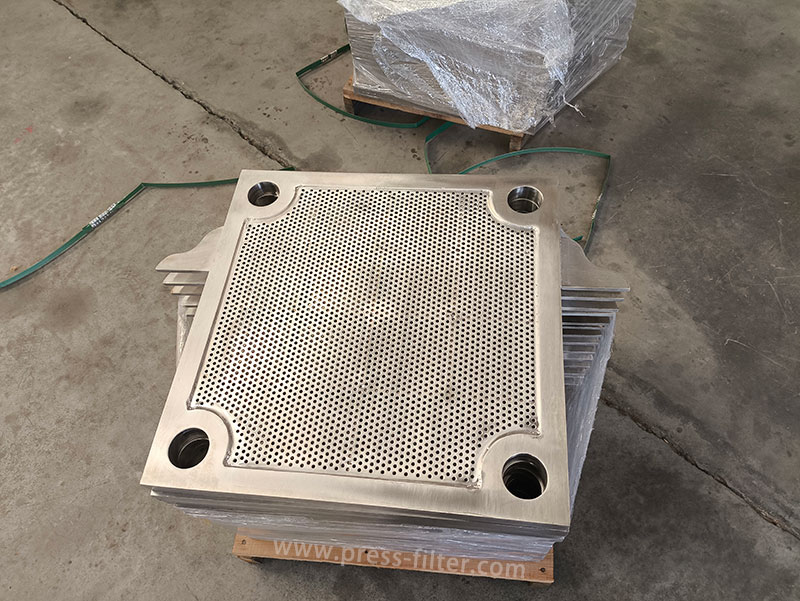
Frame Material Selection
Many users focus only on the filter plate material when choosing a filter press, neglecting the corrosion resistance of the frame. In fact, in highly corrosive environments, the frame is equally susceptible to acid mist, corrosive gases, filtrate splashing, and the surrounding environment.
Carbon steel frame with anti-corrosion coating
This is a common and economical option. The frame uses a welded carbon steel structure, with the surface treated by sandblasting, primer, and anti-corrosion topcoat.
This option is suitable for conditions where the corrosion is not particularly strong, the site has good ventilation, and there is minimal material splashing. Its advantages are lower cost and higher structural strength, but careful maintenance of the paint is required.
Carbon steel frame with stainless steel cover
For projects with strong corrosive environments where a completely stainless steel frame is not desired, a carbon steel frame with a stainless steel cover can be chosen.
This option balances structural strength and corrosion resistance, suitable for sites with heavy acid mist, easy filtrate splashing, and long-term equipment operation.
Stainless steel frame
For food, pharmaceutical, fine chemical, or high-cleanliness applications, a stainless steel frame can be selected. Common materials include 304 and 316L.
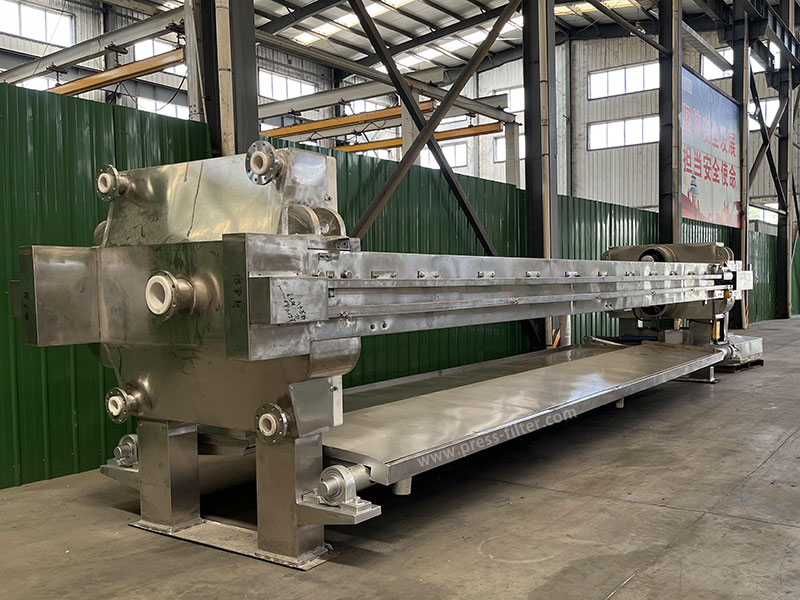
Piping, Valves, and Liquid-Contacting Components
In highly corrosive conditions, the filter press not only has filter plates in contact with the material, but also Components such as the feed pipe, outlet pipe, valves, wetting tank, flapper, and filtrate collection tank may also be in prolonged contact with corrosive liquids.
If the filtrate is highly corrosive, it is recommended that the filtrate collection groove and drip tray be made of stainless steel or have an anti-corrosion coating to prevent corrosion of the equipment’s bottom and support structures caused by prolonged dripping.
Filter Cloth Material Selection
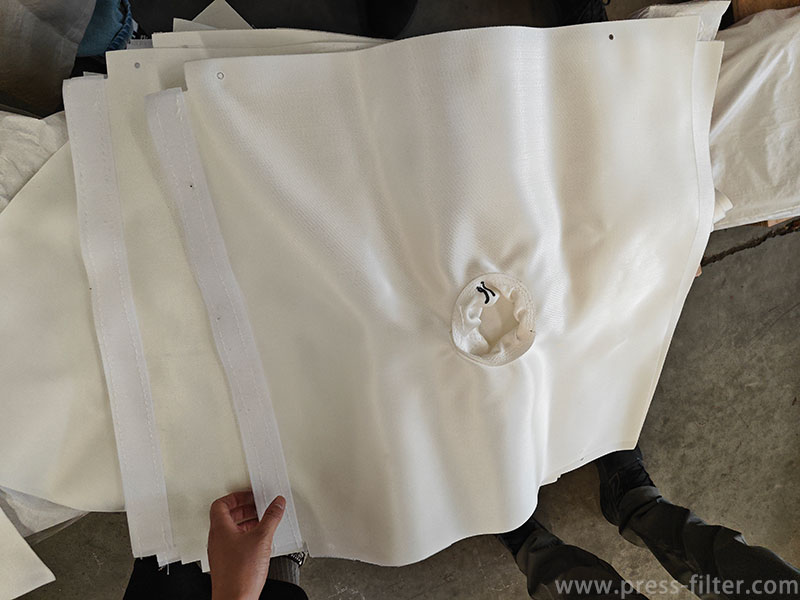
Filter cloth is in constant contact with materials. Inappropriate material selection can lead to hardening, embrittlement, damage, clogging, or decreased filtration efficiency.
In highly corrosive conditions, filter cloth selection should be based on pH value, temperature, particle size, and filtration precision requirements, not solely on price.
Feed Pump Material Selection
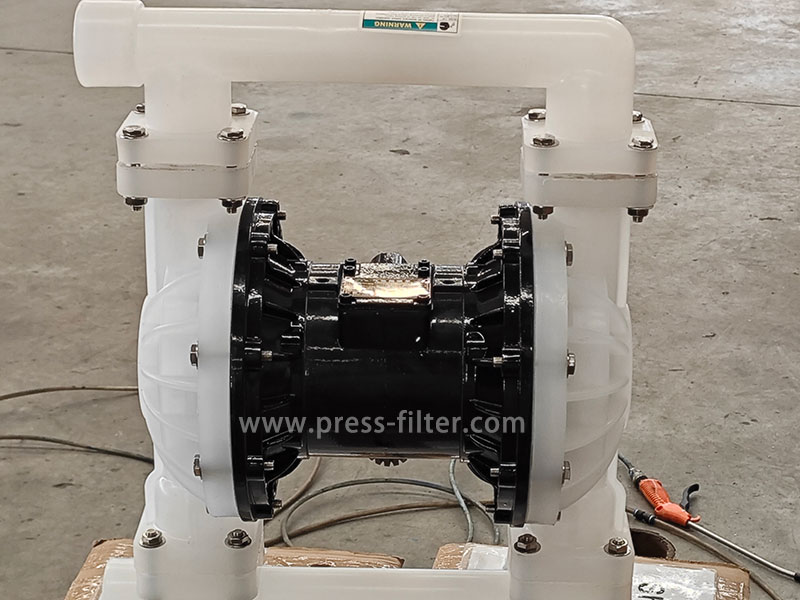
For highly corrosive chemical slurries, fluoropolymer-lined pumps, stainless steel pumps, or pumps made of other corrosion-resistant materials can be selected. For conditions with high solids content, numerous particles, and requiring high feed pressure, diaphragm pumps, screw pumps, or plunger pumps are typically considered.
Conclusion
Under highly corrosive operating conditions, the core principle for selecting filter press materials is that all parts in contact with materials, filtrate, acid mist, and corrosive gases require targeted anti-corrosion design.
During actual selection, users should provide the material name, pH value, temperature, concentration, solids content, throughput, and site environmental conditions. This will allow for the configuration of a more suitable filter press material solution, reducing corrosion risks and extending equipment lifespan.