
 English
  French
  Spanish
  Turkish
  Russian
 Causes and Solutions for Filter Press Plate Shifter Jams
The automatic plate shifter is a crucial component of a filter press for the automatic unloading of the cake. Under normal circumstances, the plate shifter sequentially opens the filter plates according to a preset program, causing the filter cake to fall off automatically, thereby improving unloading efficiency and reducing manual operation.
However, in actual use, some users encounter problems such as the plate shifter malfunctioning, jamming, being unable to pull, stopping midway, or not pulling the plates to their designated positions. Timely identification and resolution of the causes can reduce downtime and ensure stable operation of the filter press.
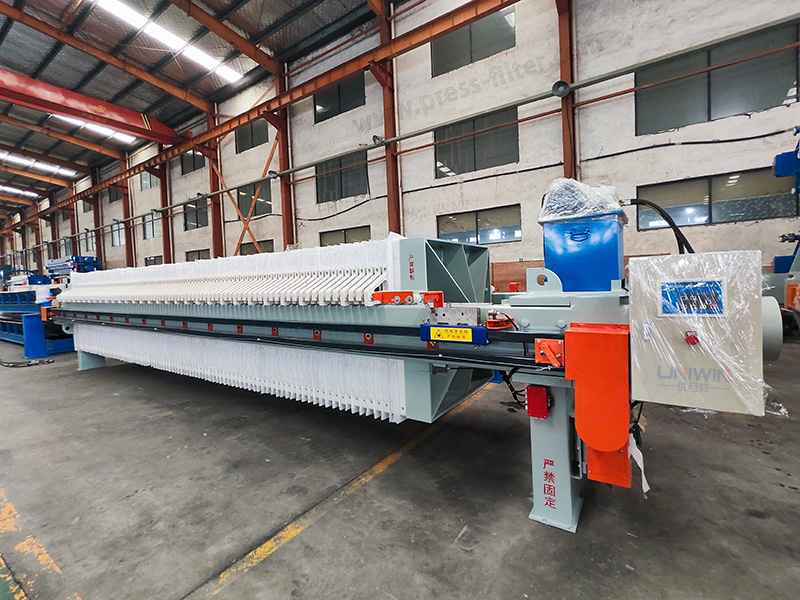
Irregular Filter Plate Arrangement or Deformation
The filter plates are the direct targets of the automatic plate-pulling system. If the filter plates are not neatly arranged, or if some filter plates are deformed or skewed, the plate shifter will easily encounter obstruction, resulting in jamming or inability to move.
Solution:
First, check if the filter plates are neatly arranged and if the lugs on both sides of the filter plates are properly positioned on the main beam track. If individual filter plates are found to be tilted, they need to be manually straightened before restarting the plate-pulling system. Filter plates that are obviously deformed, cracked, or have severely worn lugs should be replaced promptly to avoid affecting the operation of the entire plate-pulling mechanism.
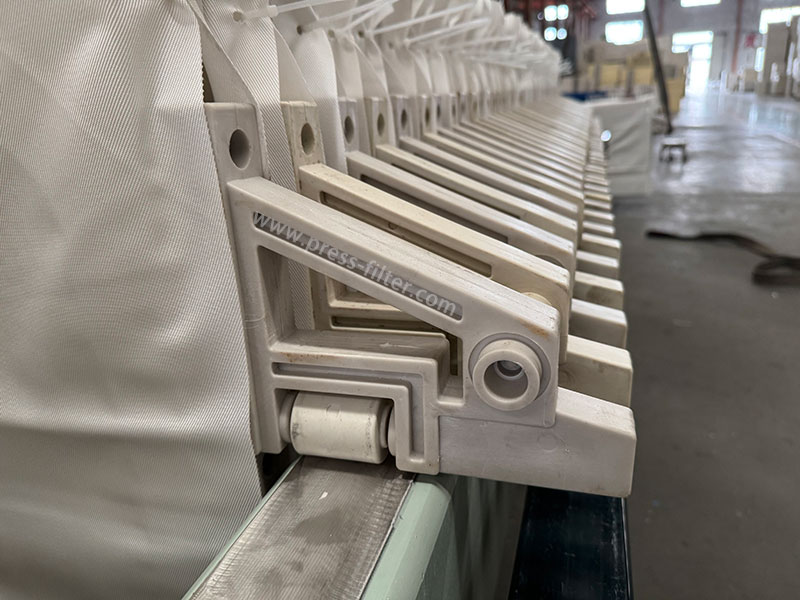
Debris on the Main Beam Track
After prolonged operation, sludge, filter residue, filter cake fragments, or other debris may accumulate on the main beam track of the filter press. If the track is not clean, the running resistance of the plate shifter will increase, leading to uneven movement and, in severe cases, jamming.
This type of problem is common when processing viscous materials, mine tailings, stone sludge, and municipal sludge.
Solution:
After the shutdown, clean the main beam track and the running area of the plate shifter, especially the contact points with the filter plate lugs. Keep the track surface clean and free of obvious buildup. For sites prone to sludge accumulation, it is recommended to check the track condition every shift and clean it regularly to prevent small problems from accumulating into equipment failure.
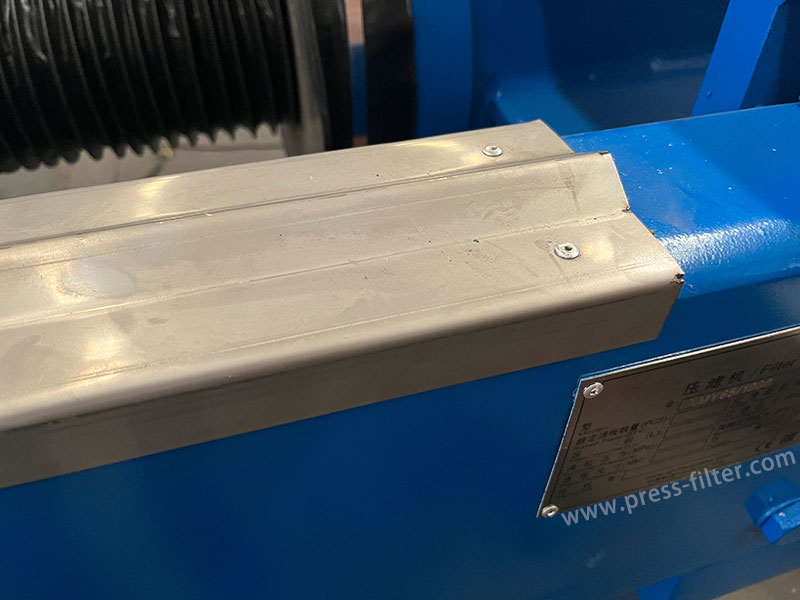
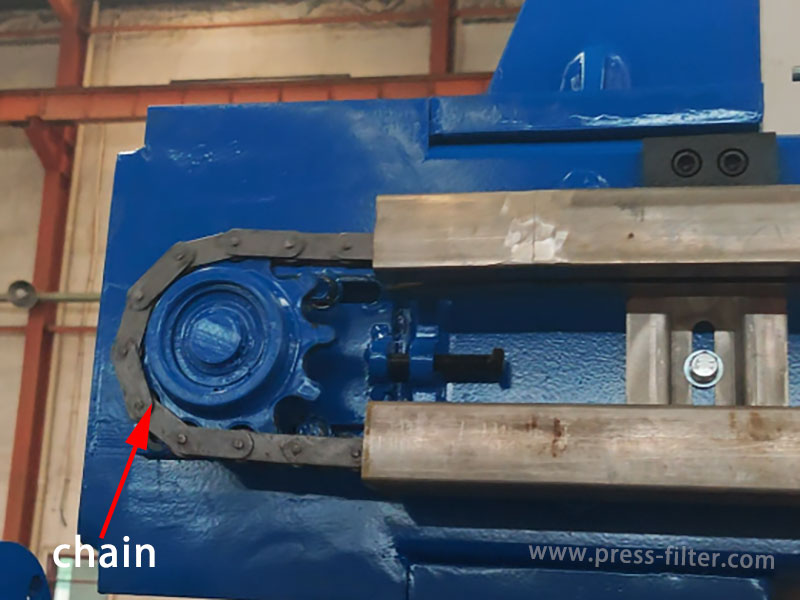
Wear on the Pulling Chain and Gears
Automatic pulling systems typically consist of a motor, reducer, chain, gears, and a pulling carriage. If the chain is loose, the gears are worn, or the bearings are damaged, vibration, jamming, abnormal noise, or inaccurate positioning may occur during the pulling process.
Solution:
Check the chain tension, ensure proper gear meshing, and check for insufficient or damaged bearings. If the chain is too loose, adjust the tensioning device appropriately; if the gears or chain are severely worn, replace them promptly. Regularly lubricate the transmission components to reduce wear and improve operational stability.
Limit Switch or Sensor Malfunction
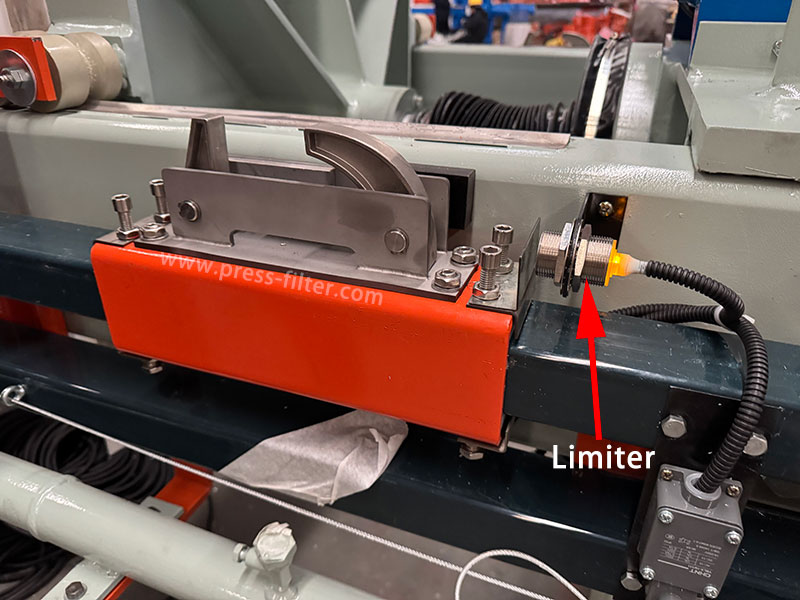
Automatic pull-plate systems rely on limit switches, proximity switches, or sensors to determine the trolley’s position. If the sensor position is off, the wiring is loose, or the signal is unstable, the control system may misjudge the position, causing the pull-plate action to pause, repeat, or fail to continue operation.
Solution:
Check if the limit switches and sensors are loose, if their installation position is correct, and if there is mud or moisture on the surface affecting the sensing. Check if the wiring connections are loose, broken, or have poor contact. If the sensor is damaged, replace it with the same or a matching model immediately.
Motor, Gearbox, or Control System Malfunction
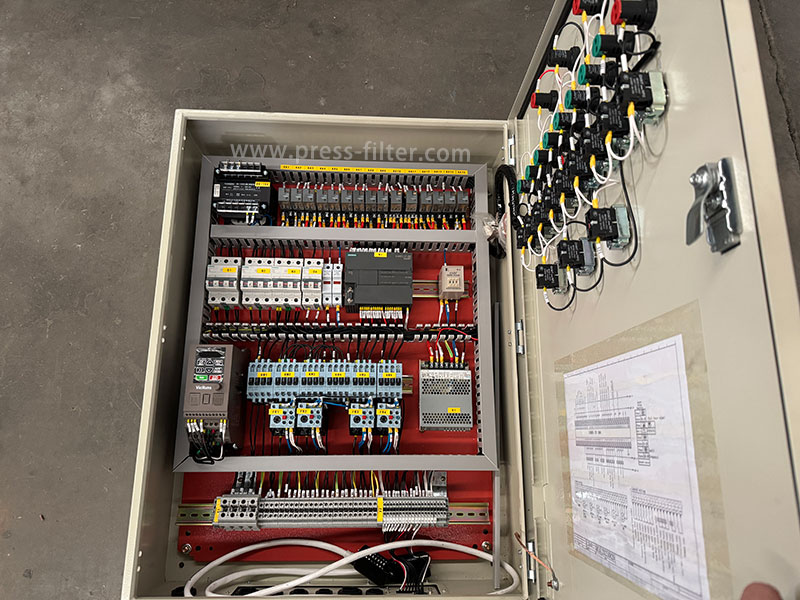
Insufficient motor power, gearbox failure, contactor malfunction, or problems with internal components in the control cabinet can also cause an unstable automatic plate pulling operation.
Solution:
Check if the motor starts normally, if the voltage is stable, and if the gearbox is leaking oil or making abnormal noises. Check the contactors, thermal relays, PLC, frequency converter, and other components in the control cabinet for alarms or damage. Electrical problems should be inspected by a professional electrician or technicians from the equipment manufacturer to avoid further malfunctions caused by misoperation.
Inadequate Routine Maintenance
Automatic plate pulling systems involve the coordinated operation of mechanical, electrical, and hydraulic components. If maintenance is neglected for an extended period, jamming problems will gradually increase.
Solutions:
- Check the track for cleanliness every shift.
- Regularly lubricate the chain, gears, and bearings.
- Check that the filter plates are neatly arranged.
- Check that limit switches and sensors are securely fixed.
- Regularly check the hydraulic oil level and quality.
Conclusion
If the plate shifter frequently jams, it is recommended to carefully inspect each part to find the specific cause. For different materials and on-site conditions, adjustments can also be made to the filtration time, pressing time, filter cloth, and flocculant based on the filter cake shedding situation.
Proper maintenance of the plate shifter can improve the filter press’s cake unloading efficiency, reduce manual operation, extend equipment lifespan, and make the entire solid-liquid separation system operate more stably.