
 English
  French
  Spanish
  Turkish
  Russian
 What is The Feed Pressure of A Filter Press?
Feed pressure is a crucial parameter during the operation of a filter press. It directly affects filtration speed, filter cake moisture content, equipment operational stability, and the lifespan of the filter cloth and filter plates. For many users, the stable dewatering performance of a filter press depends not only on the equipment model and filter cloth selection but also significantly on the proper control of the feed pressure.
Understanding Feed Pressure
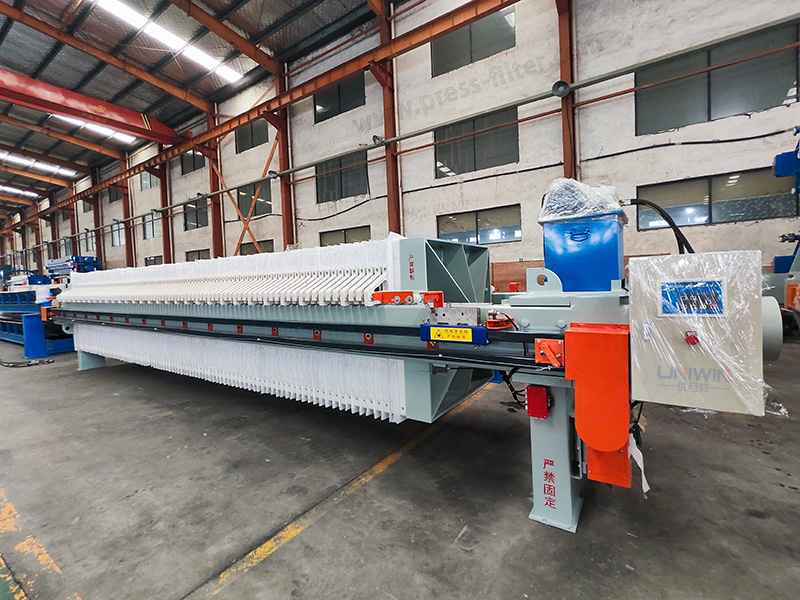
The feed pressure of a filter press is the pressure generated as material enters the filter chamber via the feed pump. Under pressure, the slurry enters the filter chamber, the liquid is discharged through the filter cloth, and solid particles are trapped inside the filter chamber, gradually forming a filter cake.
Simply put, the higher the feed pressure, the greater the driving force of the material entering the filter chamber, and the faster the filtration speed usually is. However, higher pressure is not always better. Different materials have different concentrations, particle sizes, viscosities, and filtration performance requirements, and therefore different feed pressure requirements.
If the pressure is too low, the filter chamber fills slowly, the filtration cycle becomes longer, and the filter cake may not be dense enough. If the pressure is too high, it may cause filter cloth clogging, excessive stress on the filter plates, material spraying, leakage, and even affect the safe operation of the equipment.
Optimal Feed Pressure Range for Filter Presses
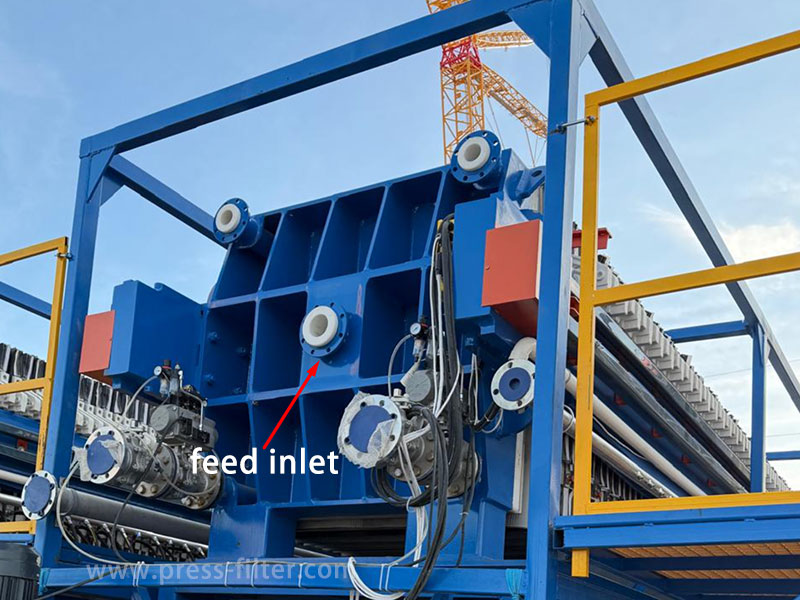
There is no fixed optimal feed pressure for a filter press; it depends on the type of equipment, filter plate material, material properties, and process requirements.
Generally, the common feed pressure for ordinary chamber filter presses is around 0.8 MPa. Diaphragm filter presses, after initial filtration, can further reduce the moisture content of the filter cake through diaphragm pressing. For materials such as stone and sludge, high-pressure circular filter presses may use higher operating pressures (e.g., 1.0-1.2 MPa) to obtain a drier filter cake.
In practical use, it is recommended not to pursue only the highest pressure, but rather to find a stable pressure range suitable for the material. If the appropriate pressure is uncertain, start with a lower feed pressure and gradually increase the pressure as the filter chamber fills. This reduces the risk of instantaneous clogging of the filter cloth and impact damage to the filter plates.
How to Optimize Feed Pressure
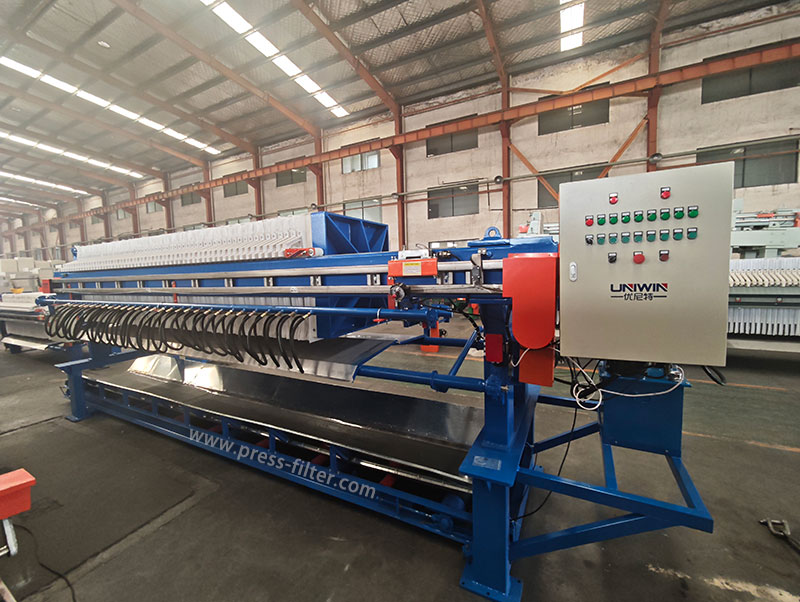
Adjust pressure based on material properties
Different materials require different pressure control methods. For materials with coarser particles and better filtration performance, the feed pressure can be appropriately increased to improve efficiency; for materials with finer particles, higher viscosity, and a tendency to clog the fabric, a more stable feed method is needed.
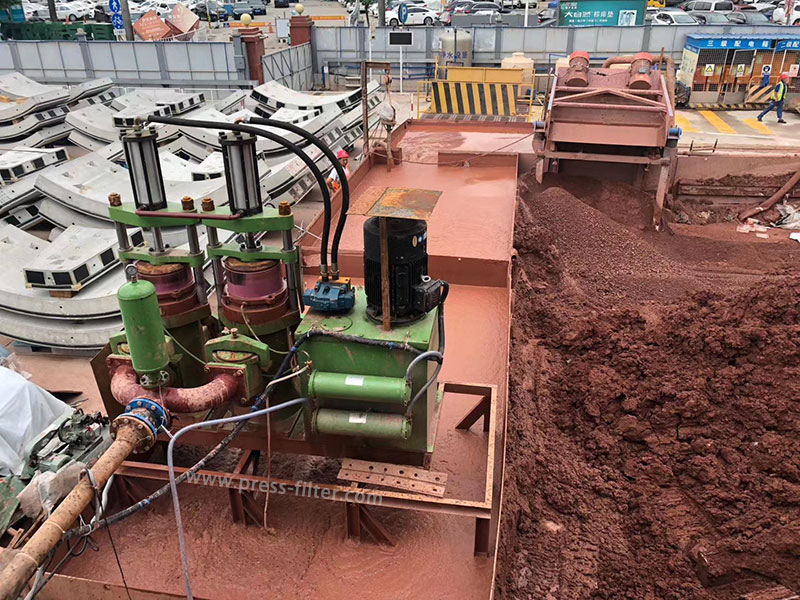
Choosing the right feed pump
The feed pump significantly impacts pressure stability. Common feed pumps include diaphragm pumps, plunger pumps, centrifugal pumps, and screw pumps. Different pump types are suitable for different materials and pressure requirements.
Insufficient pump pressure can lead to longer filtration cycles and poorly compacted filter cake. Excessive flow rate or pressure can cause impact feeding, leakage, or overloading of the equipment. Therefore, the feed pump needs to be matched to the filter press’s filtration area, filter chamber volume, material concentration, and target throughput.
Staged feeding is employed
Ideally, the feed pressure is controlled in stages. Initially, the filter chamber is empty with low resistance, allowing for a lower pressure and higher flow rate. As the filter cake forms and filtration resistance increases, the pressure is gradually increased.
This method results in a more uniform filter cake formation, reduces filter cloth clogging, and improves subsequent dewatering efficiency.
Keep the filter cloth clean
A clogged filter cloth can cause a rapid increase in feed pressure, but it will actually reduce filtration efficiency. Therefore, the filter cloth needs to be cleaned regularly to prevent fine particles, oily substances, or chemical deposits from clogging the filter cloth pores.
If the filter cloth is still not effective after repeated cleaning, it is necessary to consider replacing the filter cloth or choosing a filter cloth material with air permeability more suitable for the application.
Regularly inspect pressure gauges and pipelines
Feed pressure needs to be monitored in real time using a pressure gauge or pressure sensor. Simultaneously, feed pipelines, valves, elbows, and distribution pipes also require regular inspection. Pipeline blockages or improper valve openings can cause abnormal pressure increases or uneven feed.
Conclusion
The feed pressure of a filter press is a crucial factor affecting filtration efficiency. Appropriate feed pressure can improve filtration efficiency, enhance filter cake formation, reduce filter cake moisture content, and maintain stable equipment operation.
If you are unsure about the optimal feed pressure for your material, please provide the material name, solids content, throughput, required filter cake moisture content, and on-site operating conditions. We can then assist you in selecting the appropriate filter press model and feed pump configuration.