 English
  French
  Spanish
  Turkish
  Russian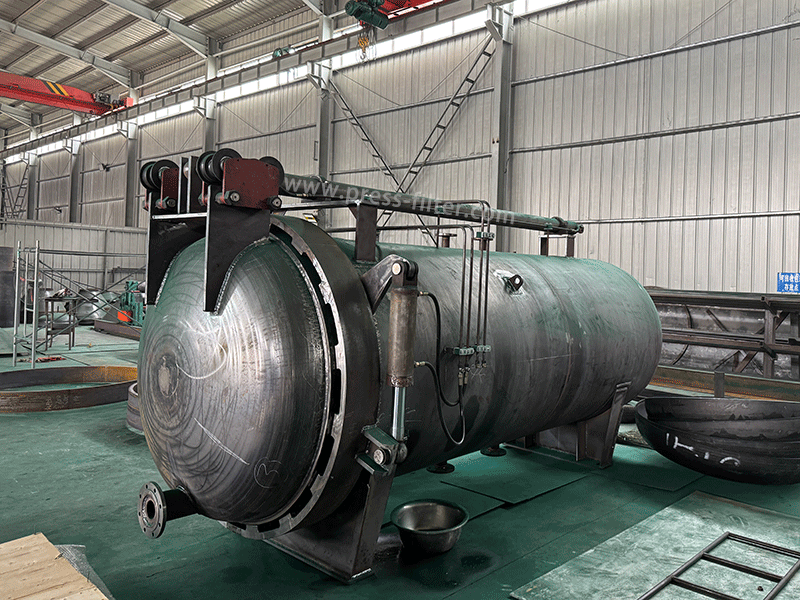
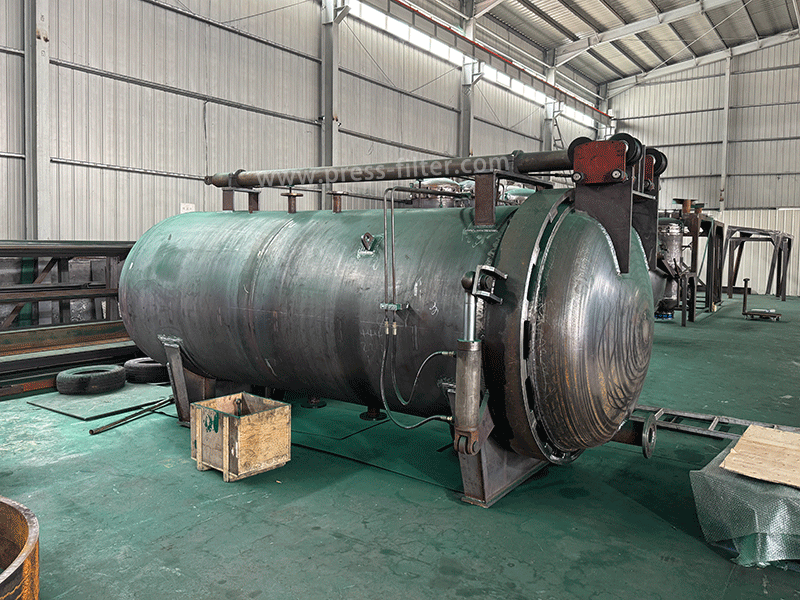
What is a Horizontal Leaf Filter?
The horizontal pressure leaf filter (HPLF) is designed for PLC automation and uses pressure interception to retain solid impurities on the filter screen. After filtration, the filtrate enters the liquid outlet pipe and flows out, finally completing solid-liquid separation. The horizontal pressure leaf filter(HPLF) is designed for PLC automation and uses pressure interception to retain impurity solids on the filter screen. After filtration, the filtrate enters the liquid outlet pipe and flows out, finally completing solid-liquid separation.
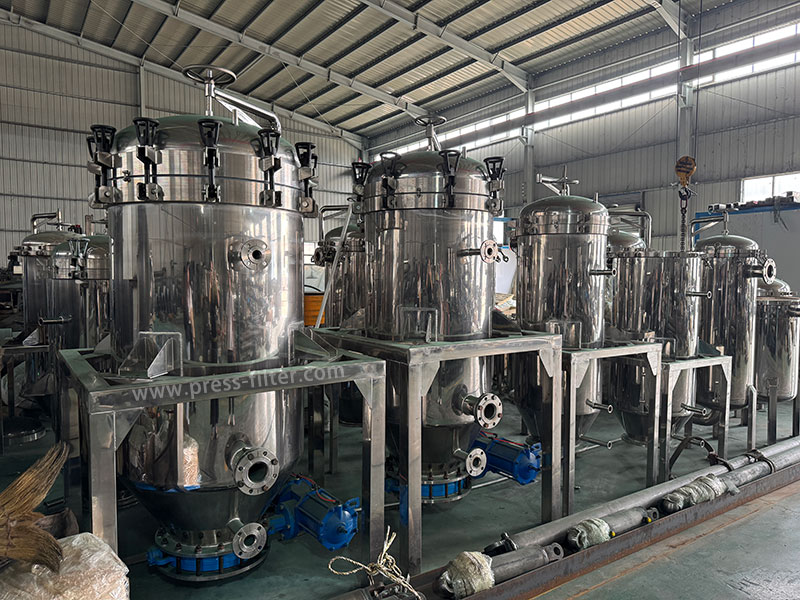
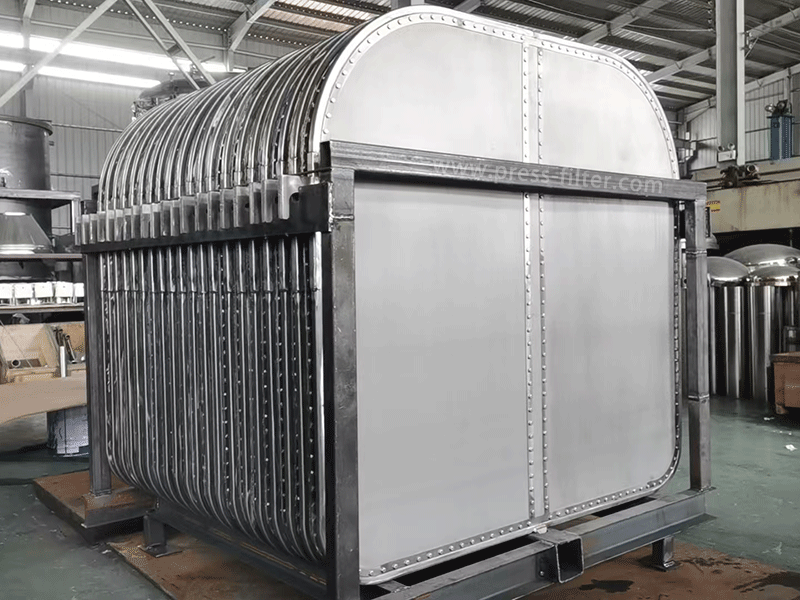
Similar to the vertical pressure leaf filter(VPLF), the leaves are made of SS304 or SS316 stainless steel materials, which are durable and have good anti-corrosion and anti-rust properties.
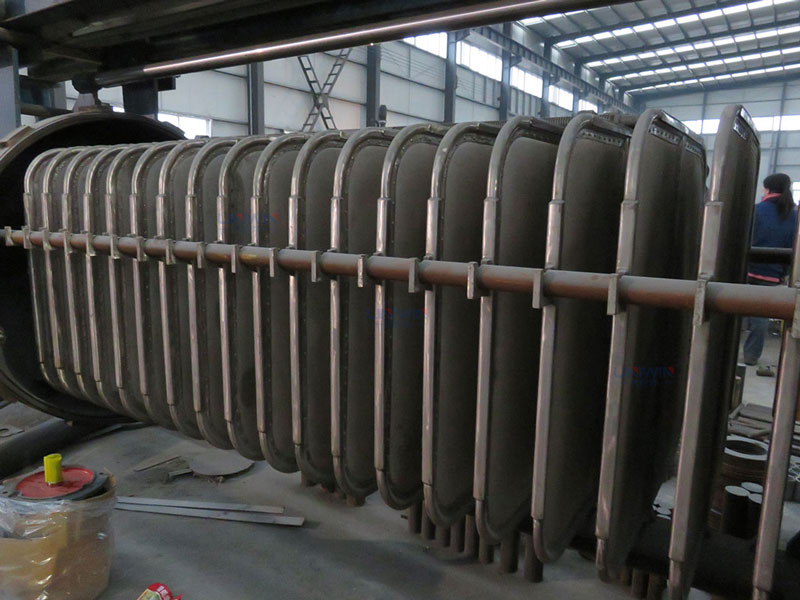
The HPLF is a completely closed filtering and discharge system to eliminate water leakage, and it is without environmental pollution. Vibration slag removal reduces labor intensity; the filter leaves of the HPLF are automatically pulled out to facilitate observation and slag removal, and the pressure display system uses hydraulic control to achieve automated operation.
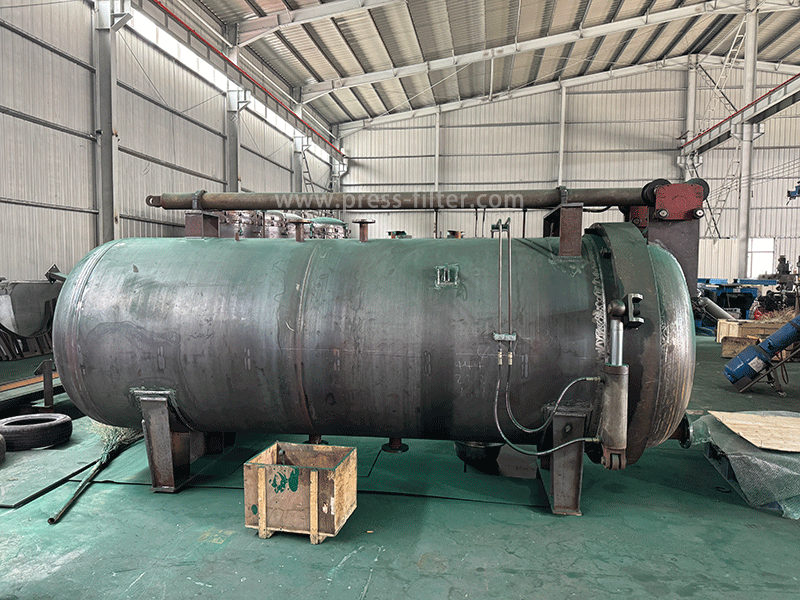
Working Principle of the Horizontal Leaf Filter
The liquid to be filtered enters the sealed horizontal filter vessel via a feed pump. Driven by the pumping pressure, the liquid flows toward the filter leaves and passes through the mesh or pre-coat layer on their surfaces.
Solid particles in the liquid are retained on the leaf surfaces, gradually forming a filter cake; the clarified filtrate enters the internal channels of the leaves, collects in the filtrate manifold, and is finally discharged through the filtrate outlet.
As filtration proceeds, an increasing amount of solid impurities accumulates on the filter screens, causing the filter cake to thicken; this results in increased filtration resistance and a rise in internal tank pressure. Once the pressure reaches a certain level, residue discharge becomes necessary: the feed of the liquid to be filtered is stopped, and compressed air is introduced into the tank via the overflow pipe to force the remaining liquid into another vessel and to dry the filter cake. After shutting off the compressed air and venting the tank to eliminate internal pressure, the handwheel is turned to open the tank head; the filter plate assembly is then pulled out, and the vibrator is activated to shake the filter leaves, dislodging the filter cake from the screens.
Unlike vertical leaf filters, horizontal leaf filters require cleaning after each filtration cycle.
Horizontal Leaf Filter Parameter
| Model | Filter Area m2 | Cylinder Diameter (mm) | Working Pressure Mpa | Working Temperature ℃ | Grease | Resin | Beverage |
|---|---|---|---|---|---|---|---|
| XY-W-5 | 5 | Ø900 Ø1200 Ø1400 Ø1500 Ø1600 Ø1700 Ø1800 Ø2000 | 0.4 | 150 | 0.2 | 0.7 | 0.8 |
| XY-W-10 | 10 | 0.4 | 150 | 0.2 | 0.7 | 0.8 | |
| XY-W-15 | 15 | 0.4 | 150 | 0.2 | 0.7 | 0.8 | |
| XY-W-20 | 20 | 0.4 | 150 | 0.2 | 0.7 | 0.8 | |
| XY-W-25 | 25 | 0.4 | 150 | 0.2 | 0.7 | 0.8 | |
| XY-W-30 | 30 | 0.4 | 150 | 0.2 | 0.7 | 0.8 | |
| XY-W-35 | 35 | 0.4 | 150 | 0.2 | 0.7 | 0.8 | |
| XY-W-40 | 40 | 0.4 | 150 | 0.2 | 0.7 | 0.8 | |
| XY-W-45 | 45 | 0.4 | 150 | 0.2 | 0.7 | 0.8 | |
| XY-W-50 | 50 | 0.4 | 150 | 0.2 | 0.7 | 0.8 | |
| XY-W-60 | 60 | 0.4 | 150 | 0.2 | 0.7 | 0.8 | |
| XY-W-70 | 70 | 0.4 | 150 | 0.2 | 0.7 | 0.8 | |
| XY-W-80 | 80 | 0.4 | 150 | 0.2 | 0.7 | 0.8 | |
| XY-W-90 | 90 | 0.4 | 150 | 0.2 | 0.7 | 0.8 | |
| XY-W-100 | 100 | 0.4 | 150 | 0.2 | 0.7 | 0.8 | |
| XY-W-120 | 120 | 0.4 | 150 | 0.2 | 0.7 | 0.8 | |
| XY-W-140 | 140 | 0.4 | 150 | 0.2 | 0.7 | 0.8 | |
| XY-W-160 | 160 | 0.4 | 150 | 0.2 | 0.7 | 0.8 | |
| XY-W-180 | 180 | 0.4 | 150 | 0.2 | 0.7 | 0.8 | |
| XY-W-200 | 200 | 0.4 | 150 | 0.2 | 0.7 | 0.8 |
Application Areas
- Oils and Fats: Crude oil, bleaching earth, hydrogenated oil, winterized oil, stearin, fatty acids, etc.
- Food: Gelatin, vinegar, starch, sugar syrup, sweet water, etc.
- Minerals: Coal fines, coal slag, etc.
- Petrochemical Products: Diesel, lubricating oil, paraffin wax, mineral oil, caustic soda, sulfur products, etc.
Vertical Pressure Leaf Filters VS Horizontal Pressure Leaf Filters?
Differences in equipment configuration
The filtration tank of a vertical leaf filter stands upright, with multiple filter leaves installed vertically side-by-side inside the tank.
The tank of a horizontal leaf filter is positioned horizontally; the filter leaves are typically arranged along the horizontal or axial direction, resulting in a greater overall length.
Differences in space requirements
Vertical leaf filters are positioned vertically; they have a small footprint but are tall, requiring sufficient ceiling height in the facility.
Horizontal leaf filters have a low profile but require more floor space.
Therefore, if the facility has limited space—particularly limited floor area—a vertical unit is usually easier to accommodate.
Differences in maintenance methods
Vertical units generally require opening the top or upper cover to inspect, clean, or replace the internal filter leaves.
Horizontal units typically require opening a large end cover, allowing the filter leaves to be inspected or withdrawn along the axis of the equipment.
Consequently, if the filter leaves require frequent removal and cleaning, a horizontal configuration may be more convenient in certain situations.